
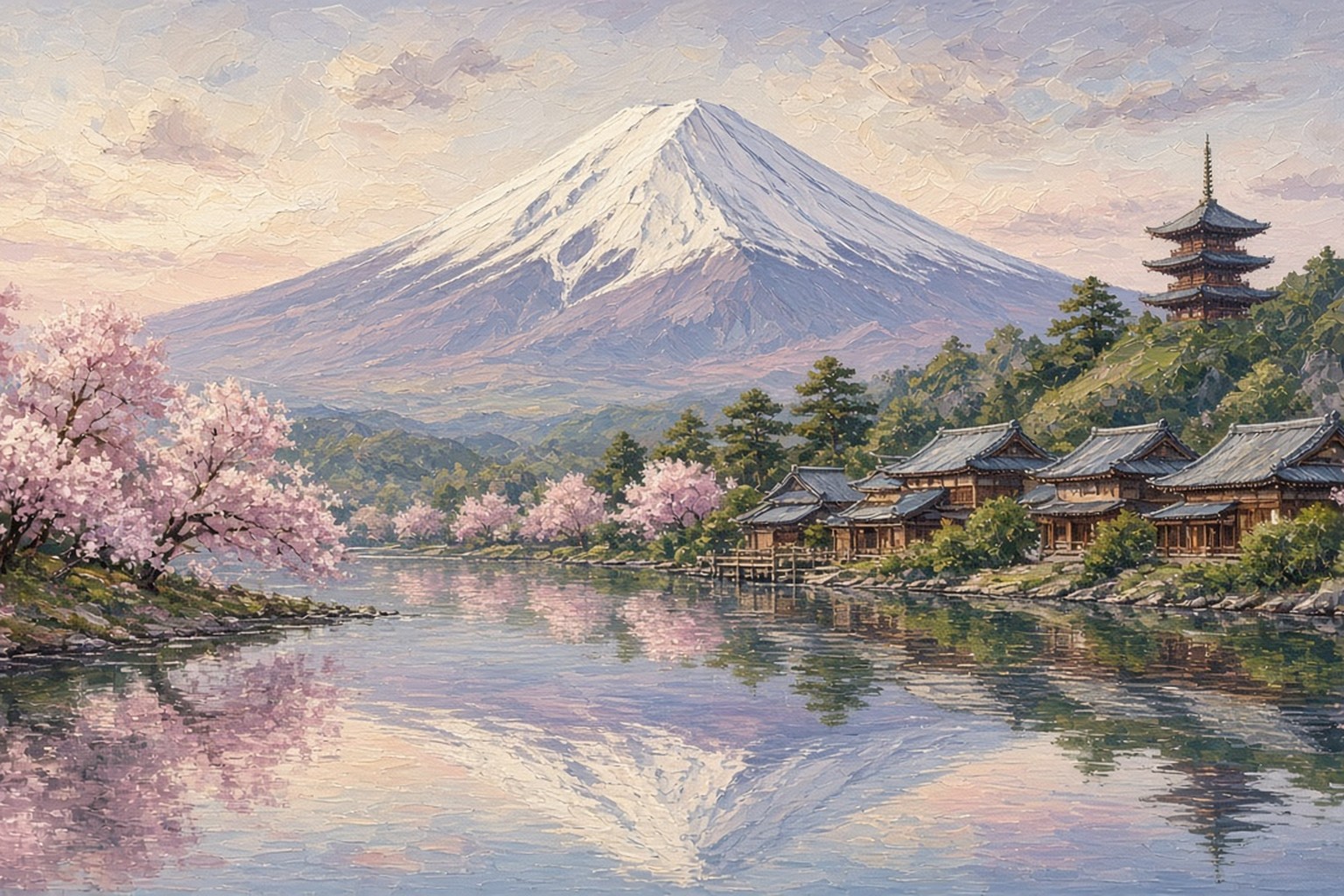
Japan, an island nation in East Asia, is often called the “Land of the Rising Sun,” a meaning reflected in its own name, Nihon or Nippon. It is a country where ancient temples and serene gardens stand alongside neon-lit cities and cutting-edge technology. Renowned for its craftsmanship, cuisine, and deep respect for tradition, Japan offers a fascinating blend of the old and the new that captivates people around the world.
Geography and Climate
Japan is an archipelago in the Pacific Ocean, made up of four main islands, Honshu, Hokkaido, Kyushu, and Shikoku, along with thousands of smaller islands. Covering about 378,000 square kilometers, it lies east of the Korean Peninsula and China, separated from the mainland by the Sea of Japan.
About three-quarters of the country is mountainous, and most people live on narrow coastal plains. Mount Fuji, an iconic volcano, is Japan’s highest peak at 3,776 meters. Because Japan lies on the Pacific Ring of Fire, it experiences frequent earthquakes and volcanic activity, and the 2011 Tōhoku earthquake and tsunami caused immense devastation in the northeast.
The climate varies greatly from north to south, ranging from snowy winters in Hokkaido to the subtropical warmth of Okinawa. Much of the country has four distinct seasons, with a rainy season in early summer and typhoons that may strike in late summer and autumn.
History and Independence
Japan has been inhabited for tens of thousands of years, with the Jōmon culture known for some of the world’s earliest pottery. Over time, a centralized state emerged, with capitals at Nara and then Kyoto, where the elegant court culture of the Heian period flourished.
From the late twelfth century, military rulers known as shoguns held real power, supported by the samurai warrior class. The Tokugawa shogunate, established in 1603, brought more than two centuries of peace and limited contact with the outside world. The arrival of American ships in 1853 led to the opening of Japan, and the Meiji Restoration of 1868 launched rapid modernization.
Japan expanded into an imperial power in the early twentieth century, but its defeat in World War II, including the atomic bombings of Hiroshima and Nagasaki in 1945, marked a turning point. A new constitution took effect in 1947, establishing a parliamentary democracy with the emperor as a symbol of the state. Japan then rebuilt quickly and became one of the world’s leading economies.
Economy and Natural Resources
Japan has one of the largest economies in the world, known for its advanced manufacturing and technology. It is a global leader in automobiles, electronics, robotics, machinery, and precision instruments, and many Japanese brands are recognized worldwide.
The country has few natural resources and imports most of its energy and raw materials. Because of this, Japan has focused on efficiency, innovation, and high-value industries, while also investing in nuclear power, renewable energy, and hydrogen technology.
Services, finance, and tourism are important parts of the economy, and visitor numbers have grown strongly in recent years. Agriculture and fishing remain culturally significant, producing rice, tea, fruit, and a wide range of seafood.
Culture and Language
Japanese is the national language, written with a combination of kanji characters and two syllabic scripts, hiragana and katakana. Shinto and Buddhism have both shaped Japanese spiritual life, and many people observe customs from both traditions, visiting shrines and temples on important occasions.
Traditional arts include the tea ceremony, ikebana flower arranging, calligraphy, and theatrical forms such as noh and kabuki, which are recognized by UNESCO. The seasonal appreciation of nature is deeply valued, especially during spring, when people gather for hanami to view the cherry blossoms.
Modern Japanese culture has also achieved global popularity through anime, manga, video games, fashion, and design. Values such as politeness, punctuality, and harmony are emphasized in daily life.
Food and Cuisine
Japanese cuisine, known as washoku, emphasizes fresh seasonal ingredients, balance, and beautiful presentation, and it is recognized by UNESCO as intangible cultural heritage. Rice, miso soup, pickles, and fish form the foundation of many traditional meals.
Sushi and sashimi are famous worldwide, while ramen, tempura, udon, soba, and yakitori are popular everyday dishes. Regional specialties such as okonomiyaki in Osaka and Hiroshima, and wagyu beef from areas such as Kobe, are celebrated. Green tea, sake, and delicate sweets called wagashi complete the culinary experience.
Kaiseki, an elegant multi-course meal rooted in the tea ceremony, showcases the artistry of Japanese chefs and the flavors of each season. Bento boxes, carefully arranged packed lunches, are enjoyed at schools, offices, and on train journeys. Bustling food markets and small neighborhood restaurants called izakaya offer a lively taste of everyday dining.
Tourism and Attractions
Tokyo, the capital, is one of the world’s largest and most exciting cities, with districts such as Shibuya, Shinjuku, and Asakusa offering everything from skyscrapers to historic temples. Kyoto, the former imperial capital, is home to more than a thousand temples, including Kinkaku-ji and the thousands of red gates at Fushimi Inari Shrine.
Nara is known for its giant Buddha at Tōdai-ji and its free-roaming deer, while Hiroshima’s Peace Memorial and Himeji Castle are UNESCO World Heritage Sites. Mount Fuji, the snowy landscapes of Hokkaido, the beaches of Okinawa, and the country’s many hot spring resorts, known as onsen, offer further unforgettable experiences.
Challenges and Opportunities
Japan faces challenges including an aging and shrinking population, a low birth rate, high public debt, and the constant risk of natural disasters. Labor shortages in some sectors have encouraged greater use of automation and gradual openness to foreign workers.
At the same time, Japan’s technological expertise, strong infrastructure, and global cultural influence provide great strengths. Innovation in robotics, clean energy, and healthcare could help it adapt successfully to the changes ahead.
Where Tradition Meets Tomorrow
Japan is a land where centuries-old rituals and futuristic innovation exist in remarkable harmony. From the quiet beauty of Kyoto’s gardens to the dazzling energy of Tokyo and the snowy peak of Mount Fuji, it offers endless discoveries. Graceful, inventive, and welcoming, Japan continues to inspire travelers and admirers everywhere.