
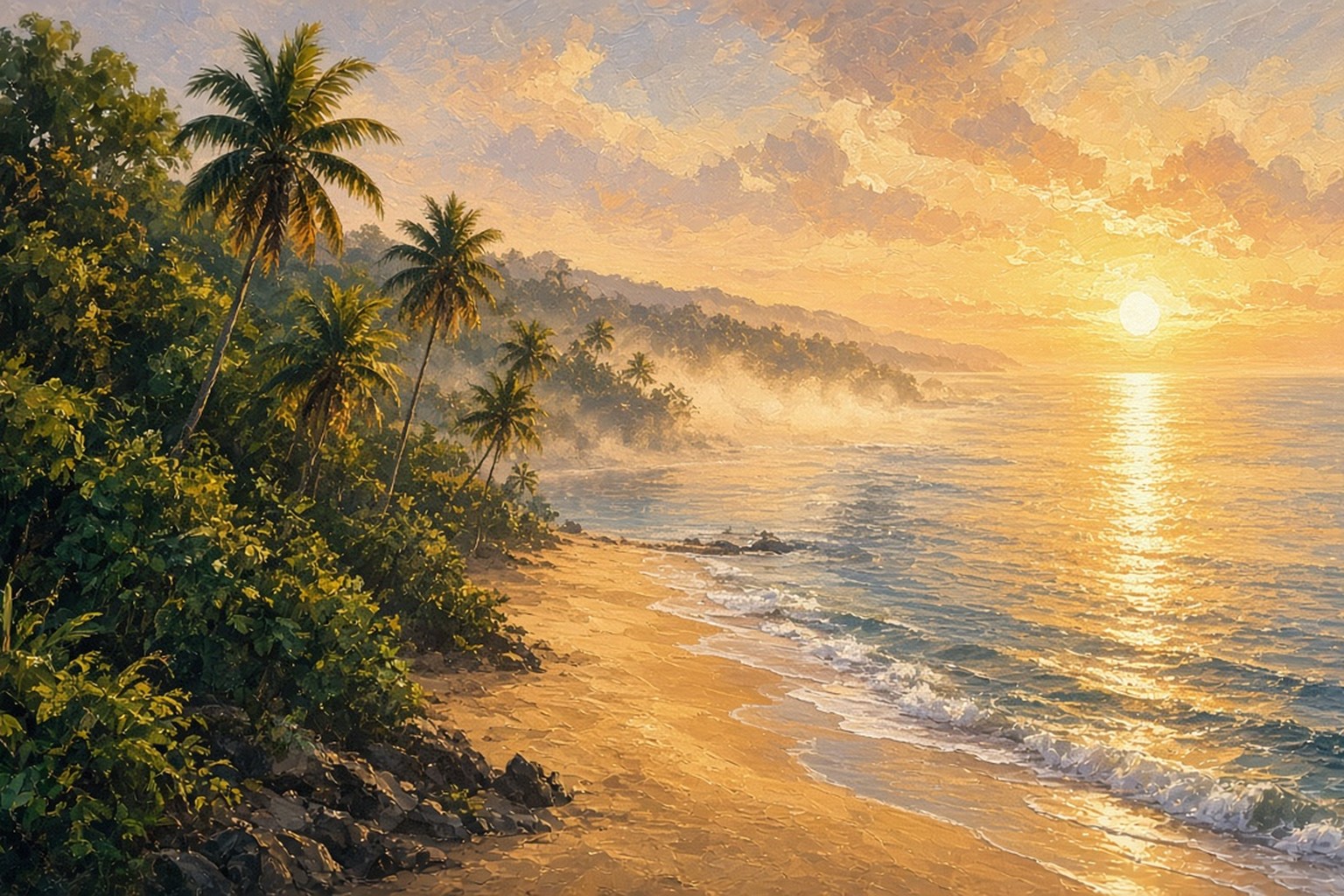
Liberia is a country on the coast of West Africa, known for its lush rainforests, long Atlantic beaches, and unique history. Founded by freed African Americans and formerly enslaved people in the nineteenth century, it became Africa’s first independent republic in 1847. Today, Liberia is rebuilding with determination, offering visitors untouched nature, warm hospitality, and a fascinating cultural blend.
Geography and Climate
Liberia covers about 111,000 square kilometers and is bordered by Sierra Leone to the northwest, Guinea to the north, Côte d’Ivoire to the east, and the Atlantic Ocean to the southwest. Its coastline stretches for roughly 580 kilometers, with lagoons, mangrove swamps, and sandy beaches.
Behind the coastal plain, the land rises to rolling plateaus and low mountains, with the highest areas in the north near the Guinean border. Liberia contains a large share of the remaining Upper Guinean rainforest, a region of exceptional biodiversity that is home to forest elephants, chimpanzees, and the rare pygmy hippopotamus.
The country has a tropical climate with a long rainy season, generally from May to October, and a drier season from November to April. Monrovia is one of the wettest capital cities in the world, and heavy rainfall supports the dense forests and many rivers that cross the country.
History and Independence
For centuries before the arrival of settlers, the region was home to many African peoples, including the Kpelle, Bassa, Gio, Kru, Vai, and others. In 1822, the American Colonization Society began settling freed African Americans on the coast, and the capital was later named Monrovia in honor of United States President James Monroe.
On 26 July 1847, Liberia declared independence, with Joseph Jenkins Roberts as its first president. For more than a century, political power was dominated by the descendants of the settlers, known as Americo-Liberians, creating deep divisions with indigenous communities.
In 1980, a military coup led by Samuel Doe ended this era, and two devastating civil wars followed between 1989 and 2003. After peace returned, Ellen Johnson Sirleaf was elected in 2005, becoming Africa’s first elected female head of state and later sharing the Nobel Peace Prize in 2011. Liberia has since held a series of peaceful elections.
Economy and Natural Resources
Liberia is rich in natural resources, including iron ore, gold, timber, and fertile land. Iron ore mining has long been one of the largest sources of export earnings, and new investments continue to develop the sector.
Rubber has been central to the economy for nearly a century, with the vast Firestone plantation at Harbel established in 1926. Farmers also grow cocoa, coffee, palm oil, cassava, and rice, which is the national staple.
Liberia also operates one of the largest shipping registries in the world, with thousands of vessels sailing under its flag. Rebuilding roads, electricity networks, and other infrastructure damaged during the years of conflict remains a key focus for growth.
Culture and Language
English is the official language, while Liberian English, also called Kolokwa, is widely spoken in everyday life. Sixteen ethnic groups are officially recognized, and many people also speak indigenous languages such as Kpelle, Bassa, and Vai. The Vai people developed their own syllabic script in the nineteenth century.
Liberian culture blends African traditions with influences brought by the settlers from the United States. A famous custom is the Liberian handshake, which ends with a playful snap of the fingers between friends.
Music, dance, and storytelling are important parts of community life, and traditional masks and carvings are used in ceremonies and festivals. Christianity is the majority faith, with a significant Muslim minority, and Independence Day on 26 July is celebrated with parades and festivities.
Food and Cuisine
Rice is the heart of Liberian cuisine, and many people feel that a meal is not complete without it. It is often served with rich, spicy soups and stews made from cassava leaves, potato greens, or palm butter, a sauce made from palm nuts.
Fufu and dumboy, soft doughs made from cassava, are eaten with pepper soup or other stews. Jollof rice, a festive dish cooked with tomatoes and spices, is popular at celebrations, while fried plantains, roasted corn, and fresh tropical fruits are sold at roadside stalls.
Seafood and fish are especially important along the coast, where they are often smoked or added to hearty soups. Hot peppers are used generously, giving many Liberian dishes a bold and fiery flavor.
Tourism and Attractions
Sapo National Park, the country’s largest protected area, preserves vast stretches of rainforest and rare wildlife. The coastal town of Robertsport is known for its excellent surfing waves and peaceful beaches near Lake Piso.
In Monrovia, visitors can explore Providence Island, where the first settlers landed, as well as the National Museum and lively markets. Kpatawee Waterfall, the forests of Lofa County, and the historic towns along the coast offer further opportunities for discovery.
Beaches near Monrovia and along the southeastern coast, such as those around Harper in Maryland County, offer quiet stretches of sand lined with palm trees. Community-based tourism projects allow visitors to stay in villages, join forest walks, and learn about local traditions from residents.
Challenges and Opportunities
Liberia faces challenges including poverty, limited infrastructure, and the lasting effects of civil war and the Ebola outbreak of 2014 to 2016. Deforestation and illegal mining also threaten its valuable forests and rivers.
At the same time, its natural wealth, young population, and growing democratic stability offer hope for the future. Investments in education, agriculture, and eco-tourism could help create jobs and improve living conditions.
Liberia’s rainforests have growing value for conservation and climate protection, and new partnerships aim to reward communities for protecting them. Renewable energy, improved roads, and stronger local institutions could also unlock new opportunities across the country.
A Republic of Rainforests and Renewal
Liberia is a land of green forests, golden beaches, and a people who have shown remarkable resilience. From the bustling streets of Monrovia to the surf of Robertsport and the wild heart of Sapo National Park, it offers a story of history, hope, and renewal. Welcoming and full of potential, Liberia is ready to share its beauty with the world.