
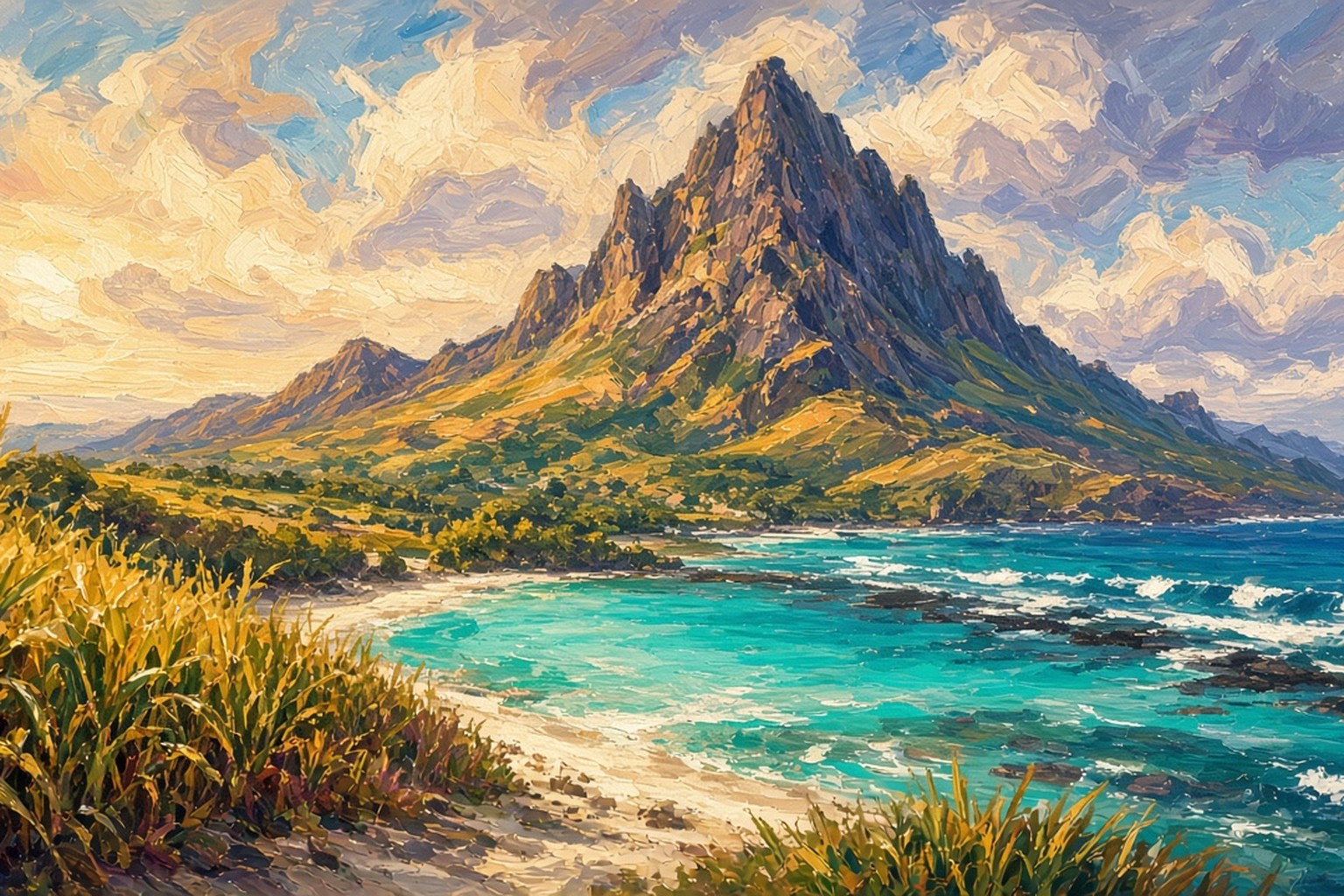
Mauritius is a tropical island nation in the Indian Ocean, lying about 2,000 kilometers off the southeast coast of Africa. Famous for its turquoise lagoons, white sand beaches, and lush volcanic mountains, it is often described as a paradise island. With a vibrant mix of African, Indian, European, and Chinese heritage, Mauritius is a true rainbow nation.
Geography and Climate
The Republic of Mauritius covers about 2,040 square kilometers and includes the main island of Mauritius as well as Rodrigues, the Agaléga islands, and the Cargados Carajos shoals. The main island lies east of Madagascar and forms part of the Mascarene Islands together with the French island of Réunion.
Mauritius was formed by volcanic activity millions of years ago, and its landscape features a central plateau surrounded by rugged mountains. The highest peak, Piton de la Petite Rivière Noire, rises to about 828 meters. The island is almost entirely encircled by coral reefs that create calm, clear lagoons along much of the coast.
The climate is tropical and pleasant, with a warm, humid summer from November to April and a cooler, drier winter from May to October. The central plateau receives more rain and is cooler than the coast, and cyclones occasionally affect the island during the summer months.
History and Independence
Mauritius was uninhabited when it was visited by Arab and later Portuguese sailors. The Dutch settled the island in 1638 and named it after Prince Maurice of Nassau, but they abandoned it in 1710. During this period, the flightless dodo, found only on Mauritius, was driven to extinction.
The French took control in 1715, renaming the island Isle de France and developing sugar plantations worked by enslaved people brought from Africa and Madagascar. The British captured the island in 1810, and after slavery was abolished in 1835, hundreds of thousands of indentured laborers arrived, mostly from India.
Mauritius gained independence from Britain on 12 March 1968 and became a republic in 1992. Since independence, it has developed into one of Africa’s most stable democracies and successful economies. In 2025, the United Kingdom agreed to transfer sovereignty over the Chagos Archipelago to Mauritius after a long dispute.
Economy and Natural Resources
For much of its history, the Mauritian economy depended on sugarcane, which still covers large areas of farmland. After independence, the country diversified into textiles and clothing manufacturing, creating many jobs and boosting exports.
Tourism has since become one of the main pillars of the economy, attracting visitors to luxury resorts and beautiful beaches. Financial services, information technology, and the seafood industry have also grown significantly.
Mauritius has few mineral resources, but it has used education, good governance, and strategic planning to achieve one of the highest standards of living in Africa. Its large exclusive economic zone in the Indian Ocean offers further potential in fisheries and the ocean economy.
Culture and Language
English is the official language of parliament, while French is widely used in media and business. Mauritian Creole, which is based largely on French, is spoken by nearly everyone, and Bhojpuri and other Asian languages are also heard. This linguistic diversity reflects the island’s many cultural roots.
Hinduism is the largest religion, followed by Christianity and Islam, with a smaller Buddhist community. Festivals such as Diwali, Christmas, Eid, Chinese Spring Festival, and Maha Shivaratri, when pilgrims walk to the sacred lake of Grand Bassin, are celebrated by people of all backgrounds.
Sega, a lively music and dance tradition with roots in the songs of enslaved Africans, is a symbol of Mauritian identity and is recognized by UNESCO. The Bhojpuri folk songs known as Geet-Gawai are also on UNESCO’s list of intangible heritage.
Food and Cuisine
Mauritian cuisine is a delicious blend of Indian, Creole, Chinese, and French flavors. Dholl puri, a thin flatbread filled with ground yellow split peas and served with curry and chutney, is one of the island’s most popular street foods.
Rougaille, a spicy tomato-based sauce often served with fish, sausage, or meat, is a Creole classic. Curries, biryani, and fried noodles known as mine frit are enjoyed across the island, while gateaux piments, small chili fritters, are a favorite snack.
Fresh seafood, tropical fruits, and locally grown vegetables are widely available at markets. Alouda, a sweet milk drink flavored with basil seeds and agar jelly, is a refreshing treat, and the island is also known for its rum and vanilla tea.
Tourism and Attractions
Mauritius has two UNESCO World Heritage Sites: Aapravasi Ghat in Port Louis, where indentured laborers first arrived, and Le Morne Cultural Landscape, a dramatic mountain where escaped slaves once sought refuge. Both sites honor important chapters of the island’s history.
Black River Gorges National Park protects native forests and rare birds, while Chamarel is known for its Seven Coloured Earth, an area of multicolored sand dunes, and a spectacular waterfall. The botanical garden at Pamplemousses is famous for its giant water lilies.
The island’s lagoons are perfect for swimming, snorkeling, kitesurfing, and boat trips to islets such as Île aux Cerfs. In the capital, Port Louis, visitors can explore the bustling Central Market, the historic Champ de Mars racecourse, and the lively Caudan Waterfront. Rodrigues, a quieter island to the east, offers hiking, kitesurfing, and a relaxed rural atmosphere.
Challenges and Opportunities
Mauritius faces challenges such as coastal erosion, coral reef damage, and the effects of climate change on its islands. Dependence on tourism and imported energy also makes the economy vulnerable to global changes.
At the same time, its political stability, educated workforce, and position between Africa and Asia offer strong opportunities. Investments in renewable energy, technology, and sustainable tourism could help the island continue to thrive.
A Rainbow Island in the Indian Ocean
Mauritius is a land of sparkling lagoons, emerald mountains, and a vibrant blend of cultures living together in harmony. From the bustling markets of Port Louis to the majestic Le Morne and the colorful earth of Chamarel, it offers beauty and warmth at every turn. Welcoming and diverse, Mauritius is a true jewel of the Indian Ocean.