
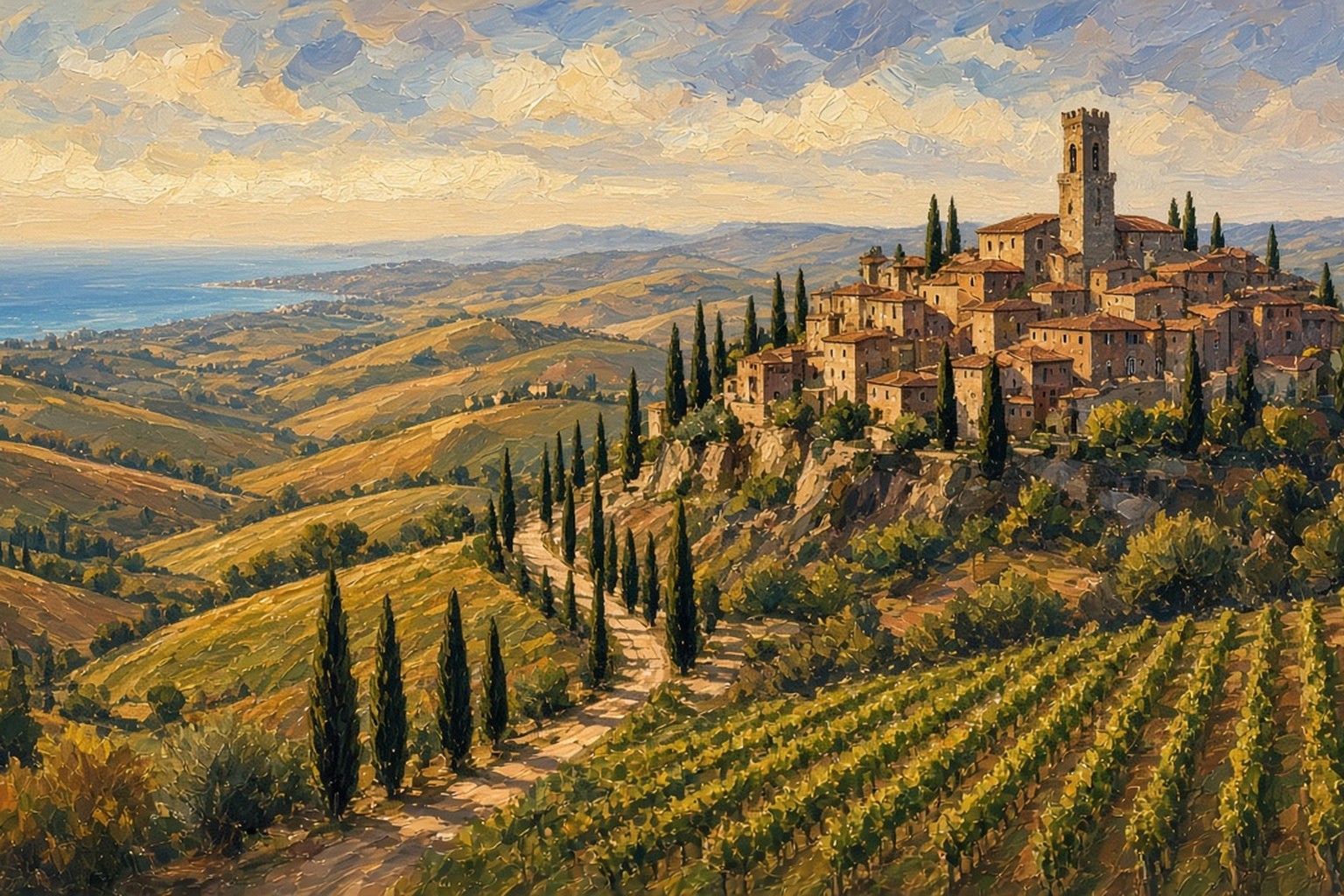
Italy, a boot-shaped peninsula reaching into the heart of the Mediterranean Sea, is one of the most celebrated countries in the world for its history, art, and cuisine. Once the center of the Roman Empire and later the birthplace of the Renaissance, it has shaped Western civilization in countless ways. With its rolling hills, historic cities, and world-famous food and fashion, Italy, often called “Il Bel Paese” or “the beautiful country,” continues to enchant visitors from every corner of the globe.
Geography and Climate
Italy covers about 301,000 square kilometers and is bordered by France, Switzerland, Austria, and Slovenia to the north. The country also surrounds two independent microstates, San Marino and Vatican City. Its long coastline is washed by the Tyrrhenian, Adriatic, Ionian, and Ligurian seas, and it includes the large islands of Sicily and Sardinia.
The Alps form a dramatic barrier along the northern border, while the Apennine Mountains run down the length of the peninsula like a spine. The Po River, the country’s longest, flows across a broad and fertile northern plain. Italy is also home to famous volcanoes, including Vesuvius near Naples, Etna in Sicily, and Stromboli.
Most of Italy enjoys a Mediterranean climate, with hot, dry summers and mild, wet winters. The Alpine regions have colder winters with abundant snow, while the far south and the islands are among the warmest parts of Europe.
History and Independence
Before Rome rose to power, the Italian peninsula was home to peoples such as the Etruscans and Greek colonists in the south. According to tradition, Rome was founded in 753 BCE, and it grew from a small city into a republic and then a vast empire that dominated the Mediterranean world for centuries.
After the fall of the Western Roman Empire, Italy was divided into many kingdoms, city-states, and territories. During the fourteenth to sixteenth centuries, cities such as Florence, Venice, and Rome became centers of the Renaissance, a flowering of art, science, and learning that transformed Europe.
The movement for unification, known as the Risorgimento and led by figures such as Giuseppe Garibaldi and Count Cavour, created the Kingdom of Italy in 1861, with Rome becoming the capital in 1871. After the Fascist era under Benito Mussolini and World War II, Italians voted in a 1946 referendum to become a republic. Italy was a founding member of NATO and the European Economic Community.
Economy and Natural Resources
Italy has one of the largest economies in Europe, with a strong manufacturing base in machinery, automobiles, chemicals, and pharmaceuticals. The country is world renowned for luxury goods, fashion, design, and high-quality food and wine products.
The industrial north, including cities such as Milan and Turin, is especially prosperous, while the south has historically had lower incomes and higher unemployment. Small and medium-sized family businesses form the backbone of much of the economy.
Italy has limited fossil fuel resources and imports much of its energy, though it is expanding solar, wind, and geothermal power. Tourism is a major industry, drawing visitors to its cities, coastlines, and countryside throughout the year.
Culture and Language
Italian is the official language, and many regions preserve their own dialects and minority languages. The Roman Catholic Church has long played a central role in Italian life, and the presence of the Vatican in Rome gives the country a special place in the Catholic world.
Italy’s artistic legacy is unparalleled, with masters such as Leonardo da Vinci, Michelangelo, and Raphael creating some of the world’s most treasured works. The country is also the birthplace of opera, with composers such as Giuseppe Verdi and Giacomo Puccini, and has made major contributions to literature, cinema, and science.
Family, food, and community are at the heart of Italian culture, and meals are often long, social occasions. Football is a national passion, and the national team has won the FIFA World Cup four times. Milan is one of the world’s leading fashion capitals, hosting major fashion weeks that attract designers and buyers from around the world.
Food and Cuisine
Italian cuisine is loved around the world for its simplicity and emphasis on fresh, seasonal ingredients. Each region has its own specialties, from the risotto and polenta of the north to the pasta and seafood dishes of the south. Pizza originated in Naples, where the art of the Neapolitan pizza maker is recognized by UNESCO.
Famous products include Parmigiano Reggiano cheese, prosciutto di Parma, balsamic vinegar from Modena, and countless varieties of olive oil. Italy is one of the world’s largest wine producers, with celebrated wines such as Chianti, Barolo, and Prosecco. Espresso, gelato, and tiramisu round out the experience.
Tourism and Attractions
Rome, the Eternal City, offers the Colosseum, the Roman Forum, the Pantheon, and the Trevi Fountain, while nearby Vatican City is home to St. Peter’s Basilica and the Sistine Chapel. Florence dazzles with Renaissance treasures such as the Uffizi Gallery and its great cathedral dome, and Venice enchants visitors with its canals and gondolas.
Italy has one of the largest numbers of UNESCO World Heritage Sites of any country. Highlights include the ruins of Pompeii, the Leaning Tower of Pisa, the Amalfi Coast, the colorful villages of Cinque Terre, the Dolomites, Lake Como, and the ancient temples of Sicily.
Challenges and Opportunities
Italy faces challenges such as high public debt, slow economic growth, an aging population, and one of the lowest birth rates in Europe. The economic gap between the north and south remains a long-standing concern.
Nevertheless, Italy’s creativity, craftsmanship, cultural heritage, and global brand give it enduring strengths. Investments in innovation, renewable energy, and infrastructure could help revitalize growth and create new opportunities for younger generations.
A Timeless Masterpiece of Europe
Italy is a country where every street, piazza, and hillside seems to hold a work of art. From the ancient ruins of Rome to the canals of Venice and the vineyards of Tuscany, it offers beauty and history at every turn. With its passion for life, food, and culture, Italy remains one of the world’s most beloved destinations.