
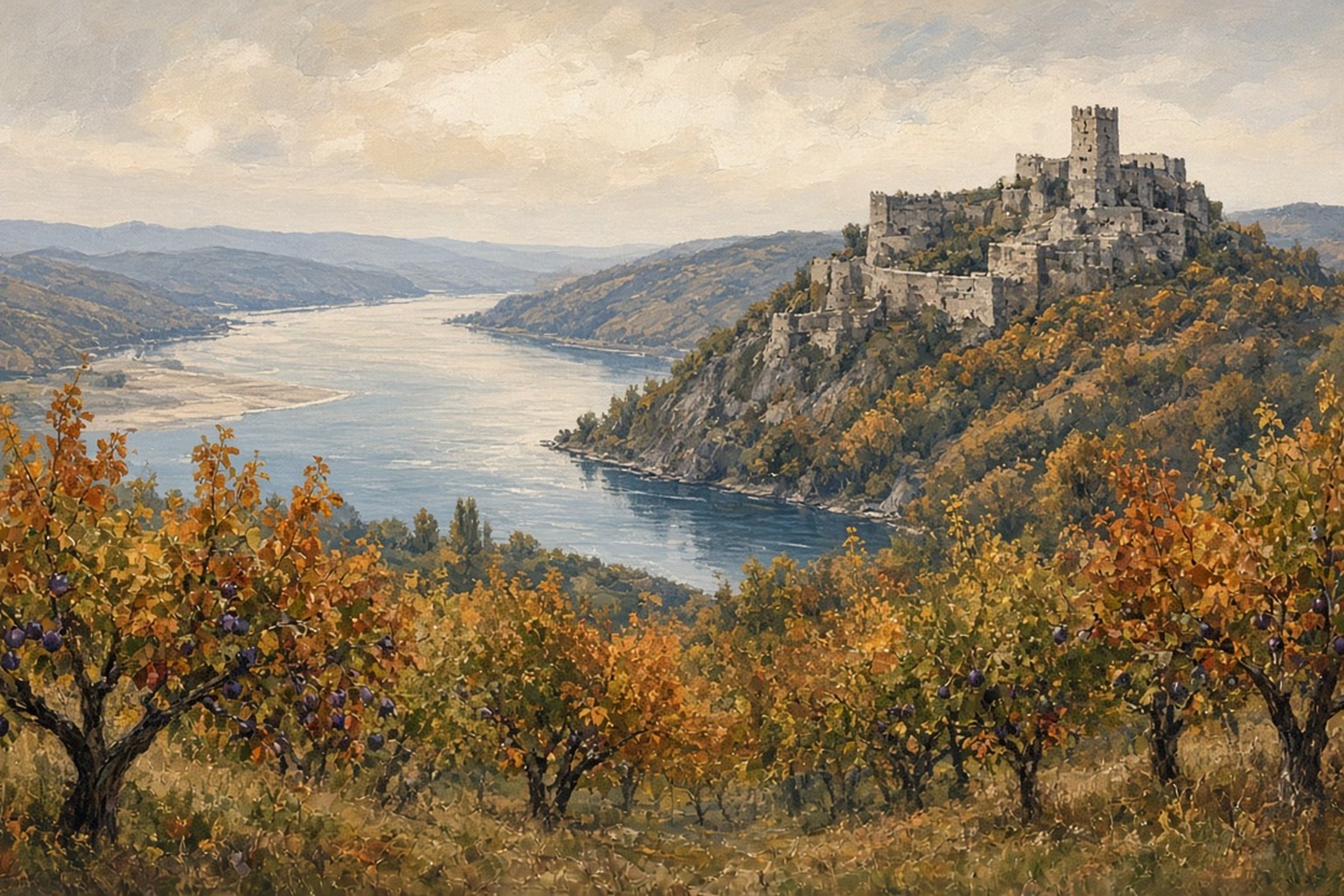
Serbia is a landlocked country in the Balkans, set at the crossroads of Central and Southeastern Europe. Its capital, Belgrade, rises where the Sava River meets the Danube, one of the oldest continuously inhabited cities in the region. With medieval monasteries, lively festivals, and warm hospitality, Serbia blends Balkan tradition with a modern, energetic spirit.
Geography and Climate
Serbia covers about 77,500 square kilometers without Kosovo, or roughly 88,000 if Kosovo is included, and it borders Hungary, Romania, Bulgaria, North Macedonia, Montenegro, Bosnia and Herzegovina, and Croatia. The northern province of Vojvodina is a fertile plain along the Danube, while the south and east are hilly and mountainous. The country has no coastline, but the Danube, Sava, and Morava rivers are its great waterways.
Notable landscapes include the Iron Gates gorge on the Danube, also known as Đerdap, and the high peaks of the Stara Planina and Kopaonik mountains. Tara National Park is known for its dense forests and deep canyon of the Drina River. The highest peak in the main part of the country is Midžor, at about 2,169 meters.
The climate is continental, with hot summers and cold, snowy winters in the north. The south feels some Mediterranean influence, which brings milder weather. In Belgrade, a strong, dry wind called the košava often blows in autumn and winter.
History and Independence
The land was settled in ancient times, and sites such as Lepenski Vir on the Danube preserve traces of one of Europe’s earliest settled communities. The Roman Empire ruled the region for centuries, producing several emperors who were born in the region. Slavs arrived in the sixth and seventh centuries, and the medieval Serbian state grew strong under the Nemanjić dynasty. Stefan Nemanja’s son, Saint Sava, founded the Serbian Orthodox Church in the early thirteenth century.
After the Battle of Kosovo in 1389, Serbia gradually fell under Ottoman rule. Two uprisings in the early nineteenth century led to an autonomous principality, and full independence was recognized at the Congress of Berlin in 1878. Serbia later became the core of Yugoslavia, which was formed after the First World War with Belgrade as its capital.
Yugoslavia broke apart in the 1990s, and Serbia became fully independent as a separate state in 2006 when Montenegro left the union. Serbia is now a parliamentary republic and has been a candidate for membership in the European Union since 2012.
Economy and Natural Resources
Serbia has a mixed economy built on agriculture, manufacturing, and services. The fertile plains of Vojvodina produce corn, wheat, sunflowers, and sugar beets, and the country is one of the world’s leading growers of raspberries and plums. Industry includes cars, machinery, food processing, and mining. The navigable Danube also carries freight and supports trade with neighboring countries.
Coal is a major source of electricity, and the country also generates power from large hydroelectric plants on the Danube. Copper mining around Bor and the fast-growing information technology sector are other key contributors. The currency is the Serbian dinar.
Belgrade is the main business center and has become a growing hub for software companies and start-ups. Wine from regions such as Fruška Gora and Župa is also gaining attention abroad.
Culture and Language
Serbian is the official language and is written in both Cyrillic and Latin scripts, with Cyrillic holding official status. Most Serbs belong to the Serbian Orthodox Church, and religious feasts such as Christmas on 7 January and the family patron saint day, called slava, are central to family life. Minority communities such as Hungarians, Bosniaks, and Roma add to the country’s variety.
Serbian folk music features the gusle, a one-stringed instrument used to accompany epic poems, and the kolo, a lively circle dance recognized by UNESCO. The Exit festival in Novi Sad and the Guča trumpet festival draw visitors from many countries. The inventor Nikola Tesla, born in a Serbian family in what is now Croatia, is a national hero, and Serbian athletes such as Novak Djokovic are widely celebrated.
Writers like Ivo Andrić, who won the Nobel Prize in Literature in 1961, shaped the region’s literary heritage. Film director Emir Kusturica and a vibrant theater scene add to the cultural life of Belgrade. Each year the Belgrade Book Fair and the FEST film festival draw large audiences.
Food and Cuisine
Serbian food is hearty and shared, with grilled meats such as ćevapi and pljeskavica at its center. Sarma, cabbage rolls filled with meat and rice, and kajmak, a creamy dairy spread, are favorites at family tables. Gibanica, a layered cheese pie, and proja, a rustic cornbread, are also common.
Meals often begin with a glass of rakija, a fruit brandy made from plums or other fruit, and end with sweet pastries such as baklava or palačinke. Ajvar, a roasted red pepper spread, is prepared in autumn in many households.
Tourism and Attractions
Belgrade’s Kalemegdan Fortress overlooks the meeting point of two rivers, and the lively Skadarlija district is known for its cafés and music. Novi Sad has the Petrovaradin Fortress, while the Studenica Monastery, Stari Ras and Sopoćani, and the Roman palace complex of Gamzigrad–Romuliana are UNESCO World Heritage Sites.
Nature lovers enjoy Tara National Park, the Uvac canyon with its griffon vultures, and the spa town of Vrnjačka Banja. The heritage railway known as the Šargan Eight winds through the hills of Mokra Gora, and the ski resort of Kopaonik adds to the options for travelers.
Challenges and Opportunities
Serbia faces challenges such as emigration of young people, regional political tensions, and the need for continuing economic reform. Air pollution in some cities and the shift from coal to cleaner energy are also priorities. Relations with Kosovo remain an unresolved issue.
Serbia’s central location, growing technology sector, and efforts to join the European Union offer clear opportunities. Investment in roads, railways, and renewable energy is helping to modernize the country. Its festivals, spas, and mountain resorts are also drawing more visitors each year.
A Crossroads of Warmth and Resilience
Serbia is a land of rivers, monasteries, and music, where long memories and open hearts go hand in hand. Its energy and hospitality make it a rewarding place to discover in the heart of the Balkans.