
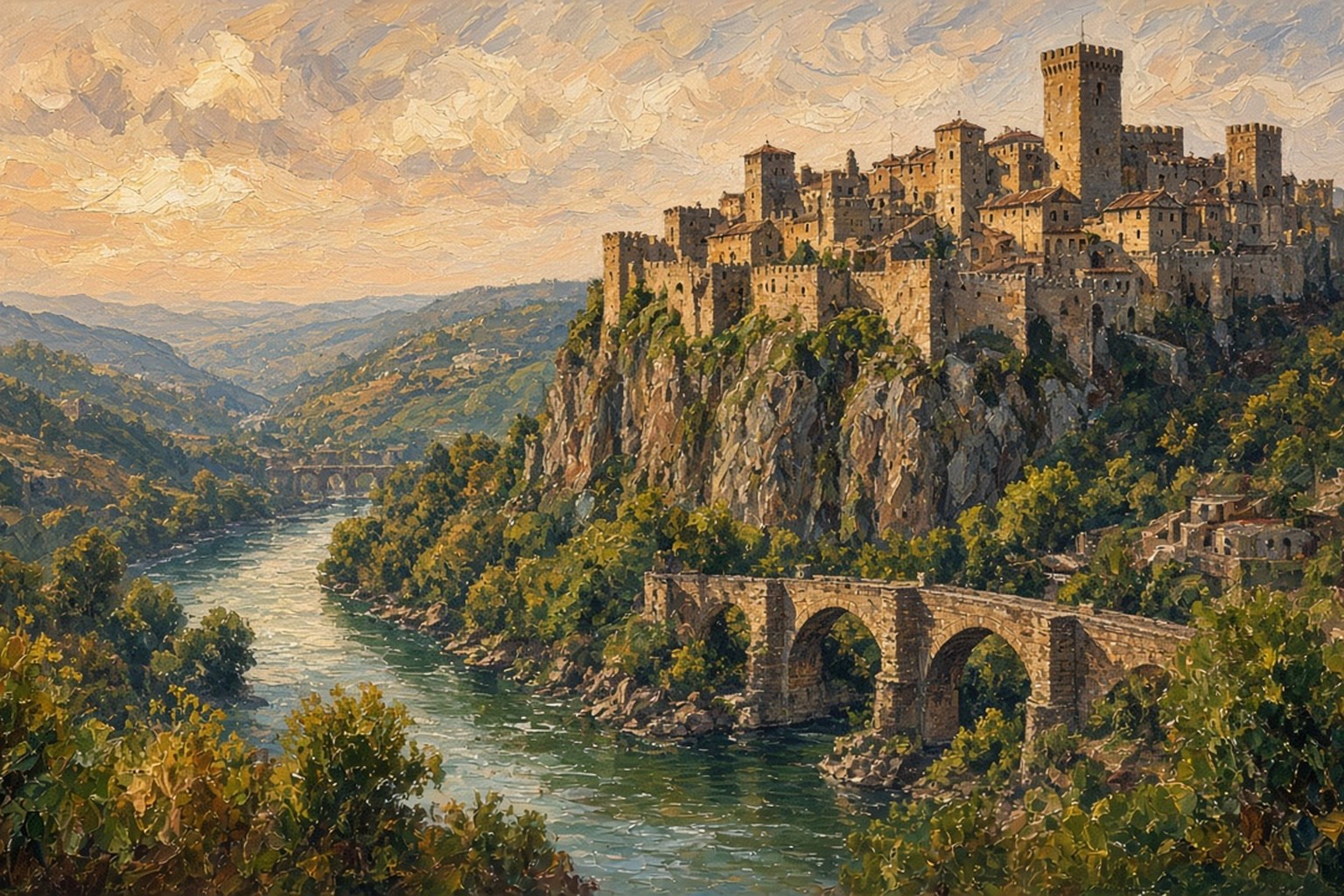
Luxembourg is a small but influential country in Western Europe, nestled between Belgium, France, and Germany. As the world’s only remaining grand duchy, it combines fairy-tale castles and green valleys with a modern, international outlook. A founding member of the European Union and home to several of its institutions, Luxembourg is a remarkable blend of tradition, prosperity, and charm.
Geography and Climate
Luxembourg covers about 2,590 square kilometers, making it one of the smallest countries in Europe. It is landlocked, bordered by Belgium to the west and north, Germany to the east, and France to the south.
The northern part of the country, known as the Oesling, is part of the Ardennes, with wooded hills, deep river valleys, and small villages. The southern region, called the Gutland or “good land,” is more open and fertile, and the Moselle River along the eastern border is lined with vineyards.
The country has a temperate climate with mild summers and cool winters, with rainfall spread throughout the year. Its forests, rivers, and rolling countryside give Luxembourg a surprisingly green and natural character for such a prosperous nation.
History and Independence
Luxembourg’s history is traditionally dated to 963, when Count Siegfried acquired a small castle on a rocky outcrop above the Alzette River. Over the following centuries, the town grew into one of the strongest fortresses in Europe, earning the nickname “Gibraltar of the North,” and the House of Luxembourg produced several Holy Roman Emperors.
The fortress was controlled in turn by Burgundians, Spanish, French, and Austrians. In 1815, the Congress of Vienna made Luxembourg a grand duchy linked to the King of the Netherlands. The Treaty of London in 1839 recognized its independence, though it lost its western territories to Belgium, and an 1867 treaty declared it neutral and required the fortress to be dismantled.
In 1890, Luxembourg gained its own ruling dynasty, the House of Nassau-Weilburg. The country was occupied by Germany during both World Wars, and after 1945 it became a founding member of the United Nations, NATO, Benelux, and the European communities that later became the European Union.
Economy and Natural Resources
In the nineteenth and twentieth centuries, iron ore deposits in the south fueled a powerful steel industry that brought prosperity to the country. The world steel company ArcelorMittal still has its headquarters in Luxembourg City.
Today, Luxembourg is one of the world’s leading financial centers, especially for investment funds, and it has one of the highest incomes per person in the world. The country is also home to satellite operators, logistics companies, and a growing space industry.
Luxembourg City hosts important European institutions, including the Court of Justice of the European Union and the European Investment Bank. A large share of the workforce commutes daily from France, Belgium, and Germany, and in 2020 Luxembourg became the first country to make all public transport free nationwide.
Culture and Language
Luxembourg has three official languages: Luxembourgish, French, and German. Luxembourgish is the national language and a strong symbol of identity, while French is widely used in government and German in the media. English is also commonly spoken, and nearly half of residents are foreign nationals.
National Day, celebrated on 23 June, honors the official birthday of the Grand Duke with parades, concerts, and fireworks. The Schueberfouer, a funfair dating back to 1340, is one of the oldest and most popular events of the year.
The town of Echternach holds a famous dancing procession each Whit Tuesday, recognized by UNESCO as intangible cultural heritage. Music festivals, museums, and the modern Philharmonie concert hall reflect the country’s lively cultural scene.
Food and Cuisine
Luxembourgish cuisine combines French refinement with German heartiness. The national dish is Judd mat Gaardebounen, smoked pork collar served with broad beans and potatoes. Bouneschlupp, a green bean soup, and Kniddelen, flour dumplings, are other traditional favorites.
Gromperekichelcher, crispy potato pancakes, are popular at markets and fairs, while Rieslingspaschtéit, a pastry filled with meat in Riesling jelly, is a local specialty. The Moselle valley produces excellent white wines and sparkling crémant.
Bakeries and pastry shops are an important part of daily life, offering fine cakes and tarts such as Quetschentaart, a plum tart enjoyed in late summer. Thanks to its many international residents, Luxembourg also has a wide variety of restaurants from around the world.
Tourism and Attractions
The old quarters and fortifications of Luxembourg City are a UNESCO World Heritage Site. Visitors can walk through the Bock Casemates, a network of tunnels carved into the rock, and admire views over the picturesque Grund district along the Alzette River.
In the north, the restored Vianden Castle rises dramatically above the Our River, while the Mullerthal region, known as “Little Switzerland,” offers forest trails among sandstone rock formations. The Moselle valley invites visitors to explore wine villages and the small town of Schengen, where the famous agreement on open borders was signed.
Other highlights include the castles of Beaufort and Bourscheid, the medieval town of Echternach with its abbey, and the former mining landscapes of the south, now known for industrial heritage sites. Cycling and hiking trails crisscross the entire country.
Challenges and Opportunities
Luxembourg faces challenges such as high housing costs, traffic congestion from cross-border commuters, and a strong dependence on the financial sector. Balancing rapid growth with quality of life is an ongoing concern.
Its stability, multilingual workforce, and central location in Europe provide excellent opportunities. Investments in technology, space research, and sustainability are helping to diversify the economy for the future.
The country also supports international development and climate projects, and it is investing heavily in rail, trams, and cycling infrastructure to reduce congestion and emissions. These efforts aim to keep the grand duchy attractive for residents and businesses alike.
A Small Nation at the Heart of Europe
Luxembourg is a country where medieval fortresses overlook modern European institutions and quiet villages sit among vineyards and forests. From the historic heart of its capital to the castles of the Ardennes and the gentle Moselle, it offers rich variety in a compact space. Welcoming and cosmopolitan, Luxembourg is a true gem of Europe.