
Lithuania is the southernmost of the three Baltic states, a land of green forests, glittering lakes, and a long and proud history. Once the heart of the vast Grand Duchy of Lithuania, it is today a dynamic European nation known for its baroque capital, sweeping coastal dunes, and passion for basketball. With its ancient language and warm traditions, Lithuania offers a captivating journey through past and present.
Geography and Climate
Lithuania covers about 65,300 square kilometers and is bordered by Latvia to the north, Belarus to the east and south, Poland to the south, and the Russian region of Kaliningrad to the southwest. To the west lies the Baltic Sea, with a short but beautiful coastline.
The country is mostly flat or gently hilly, with the highest point, Aukštojas Hill, rising only about 294 meters. Thousands of lakes are scattered across the land, especially in the east, and the Nemunas River flows through the country before reaching the Curonian Lagoon. The Curonian Spit, a narrow strip of sand dunes and pine forest, separates the lagoon from the sea.
Lithuania has a temperate climate with warm summers and cold, snowy winters. Coastal areas are milder, while inland regions experience greater temperature differences between the seasons. Long summer evenings and colorful autumns make the countryside especially charming.
History and Independence
Baltic tribes lived in the region for thousands of years, and in 1253 Mindaugas was crowned the first and only king of Lithuania. Under Grand Duke Gediminas and his successors, the Grand Duchy of Lithuania expanded dramatically, becoming one of the largest states in Europe during the fourteenth and fifteenth centuries. Lithuania was also one of the last European states to adopt Christianity, in 1387.
In 1569, the Union of Lublin joined Lithuania and Poland in the Polish-Lithuanian Commonwealth. After the partitions of the late eighteenth century, most of Lithuania became part of the Russian Empire. Lithuania declared independence on 16 February 1918, but in 1940 it was occupied by the Soviet Union, followed by Nazi German occupation and renewed Soviet rule.
On 11 March 1990, Lithuania became the first Soviet republic to declare the restoration of its independence. In January 1991, unarmed citizens defended key buildings in Vilnius against Soviet troops, and international recognition followed later that year. Lithuania joined the European Union and NATO in 2004 and adopted the euro in 2015.
Economy and Natural Resources
Lithuania has a modern and diverse economy driven by services, manufacturing, and trade. Key industries include food processing, furniture, chemicals, plastics, and electronics, and the country is known for its advanced laser technology.
The ice-free port of Klaipėda is an important gateway for shipping on the Baltic Sea. In 2014, Lithuania opened a floating liquefied natural gas terminal there, helping to strengthen its energy independence.
In recent years, Vilnius has become a growing hub for financial technology, startups, and information technology services. Agriculture remains important too, producing grain, dairy, and meat, while forests support timber and wood industries.
Culture and Language
Lithuanian is the official language and is considered one of the oldest living Indo-European languages, preserving many ancient features. Most Lithuanians are Roman Catholic, though traces of pre-Christian beliefs survive in folk customs and celebrations.
Folk music is deeply cherished, especially the sutartinės, ancient polyphonic songs recognized by UNESCO. Lithuanian cross-crafting, the art of making carved wooden crosses and shrines, is also on UNESCO’s list of intangible heritage. The Song Festival brings together thousands of performers in a joyful celebration of national culture.
Basketball is often described as Lithuania’s second religion, and the national team has won several Olympic bronze medals. Midsummer, known as Joninės or Rasos, is celebrated with bonfires, songs, and flower wreaths on the shortest night of the year.
Food and Cuisine
Lithuanian cuisine is hearty and based on potatoes, grains, dairy, and pork. The most famous dish is cepelinai, large potato dumplings filled with meat or curd cheese and served with sour cream and bacon sauce. Kugelis, a baked potato pudding, is another favorite.
In summer, many people enjoy šaltibarščiai, a bright pink cold soup made with beets, kefir, cucumbers, and dill. Dark rye bread is a staple, and fried bread with garlic is a popular snack with beer.
For celebrations, Lithuanians serve šakotis, a spectacular tree-shaped cake baked on a rotating spit over an open fire. Smoked fish from the Curonian Lagoon, wild mushrooms, berries, and honey also reflect the country’s close connection to nature.
Tourism and Attractions
The Old Town of Vilnius, a UNESCO World Heritage Site, is one of the largest surviving medieval old towns in Northern Europe, filled with baroque churches, courtyards, and cobbled streets. Kaunas, the country’s interwar capital, is known for its modernist architecture, which is also recognized by UNESCO.
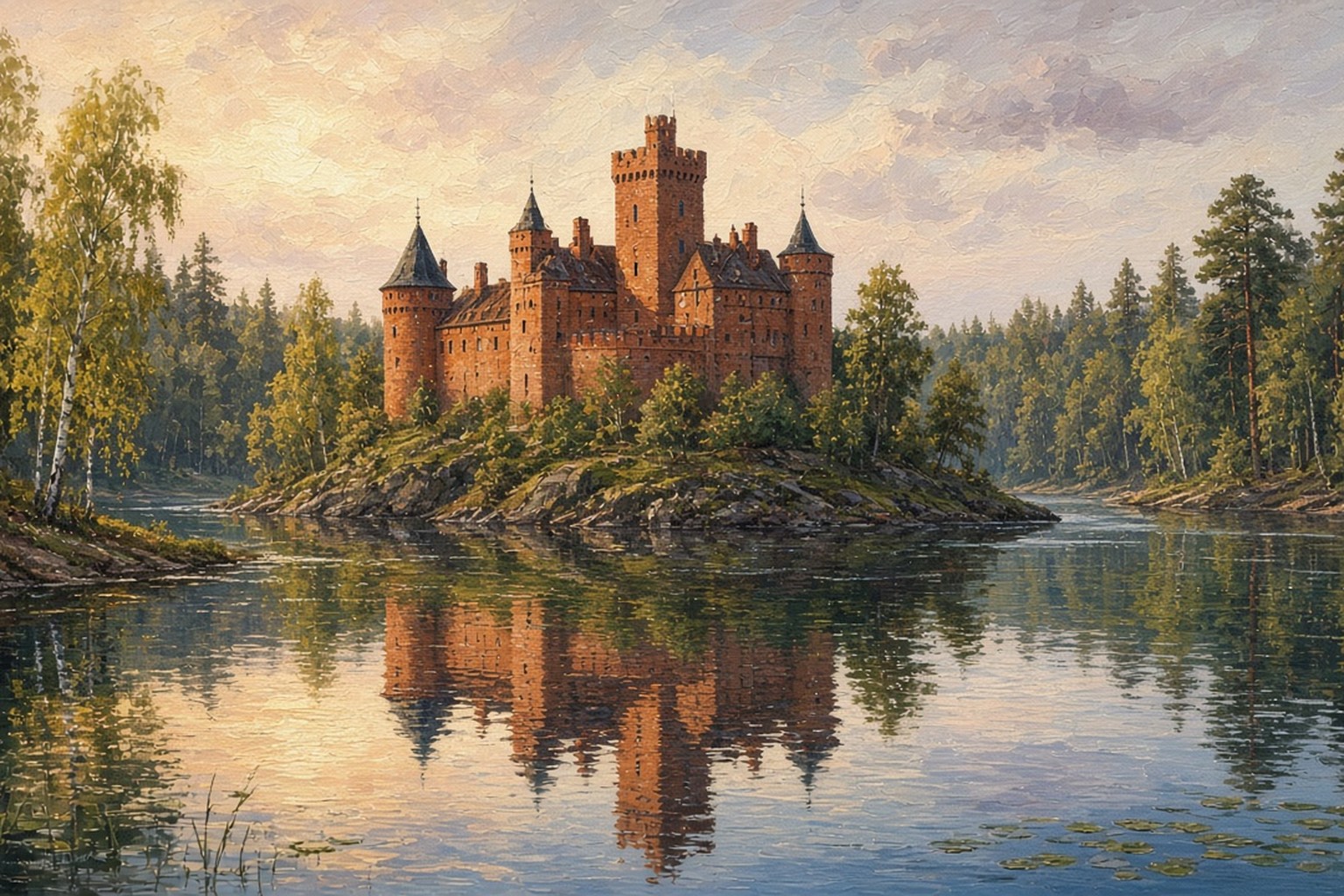
Trakai Island Castle, built of red brick on a lake near Vilnius, is one of the country’s most iconic sights. The Curonian Spit, with its towering dunes and fishing villages such as Nida, is another UNESCO site, along with the archaeological site of Kernavė.
Near the city of Šiauliai, the Hill of Crosses holds hundreds of thousands of crosses left by pilgrims as a symbol of faith and resistance. Visitors also enjoy the seaside resort of Palanga, the lakes of Aukštaitija National Park, and the spa town of Druskininkai.
Challenges and Opportunities
Lithuania faces challenges such as an aging population, emigration of young people, and differences in development between cities and rural areas. Its location on the eastern edge of the European Union also makes security a top priority.
At the same time, its educated workforce, strong technology sector, and modern infrastructure offer excellent opportunities. Continued investment in innovation, renewable energy, and tourism could help the country thrive.
A Land of Amber and Ancient Voices
Lithuania is a land where ancient songs, amber shores, and medieval castles meet a confident and modern spirit. From the baroque streets of Vilnius to the shifting dunes of the Curonian Spit and the quiet beauty of its lakes, it offers rich and memorable experiences. Proud of its past and eager for the future, Lithuania shines brightly on the Baltic.