
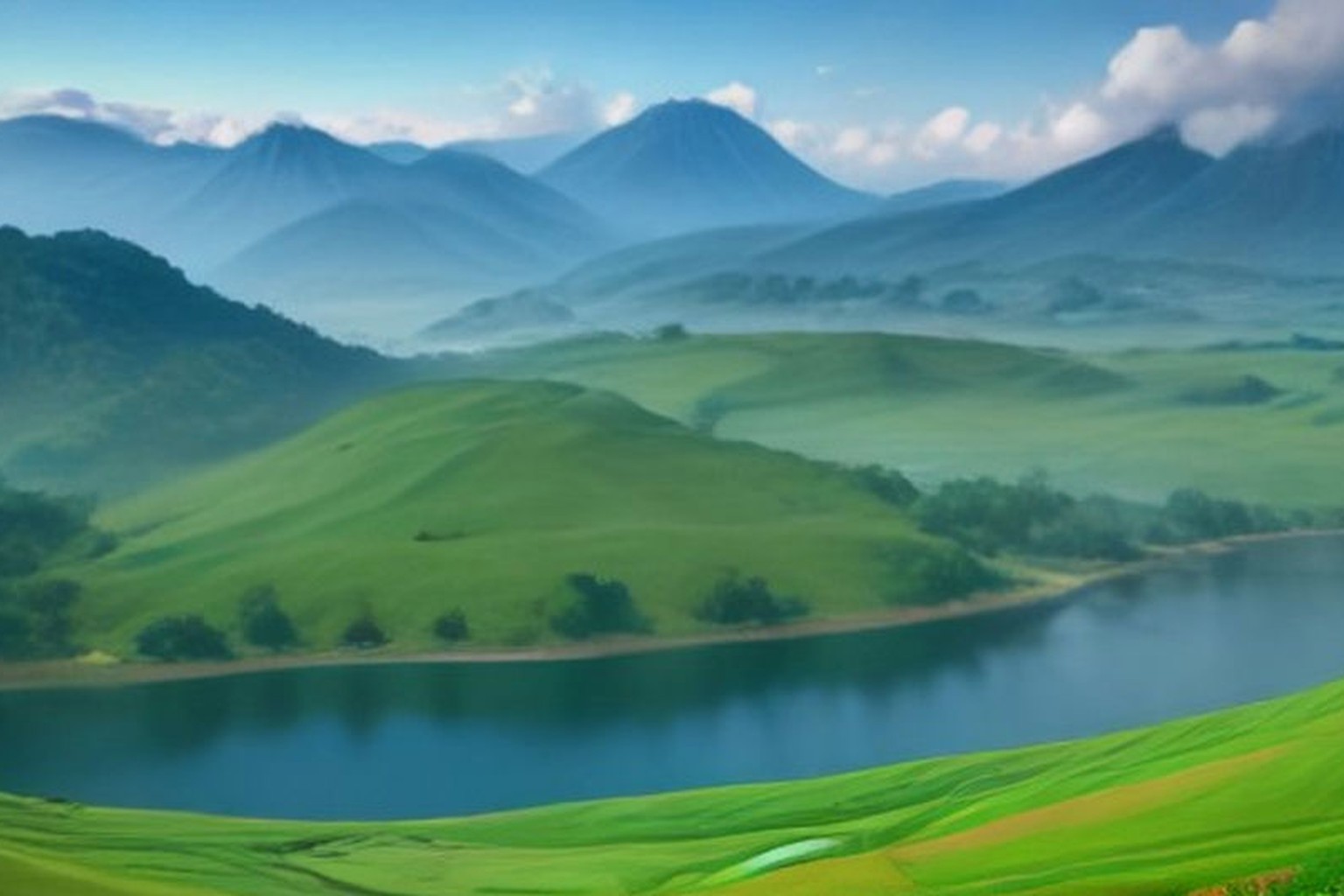
Rwanda is a small, landlocked country in the heart of East Africa, famed as the “Land of a Thousand Hills.” Its green slopes, misty volcanoes, and sparkling lakes make it one of the most scenic nations on the continent. Today it is admired for its cleanliness, its conservation successes, and the determination of its people to build a united future.
Geography and Climate
Rwanda covers about 26,300 square kilometers and is bordered by Uganda, Tanzania, Burundi, and the Democratic Republic of the Congo. Kigali, the capital, sits near the center of the country on a series of hills. Despite its small size, the landscape changes dramatically from region to region.
The west is dominated by high mountains, including the Virunga volcanoes, where Mount Karisimbi rises to about 4,500 meters. Lake Kivu, one of Africa’s great lakes, forms much of the western border, while the east features savanna, wetlands, and gentle plains around Akagera National Park. Terraced hillsides cover much of the countryside.
Because of its altitude, Rwanda enjoys a mild tropical highland climate with pleasant temperatures year round. There are two rainy seasons, from roughly March to May and from October to November, and two drier periods in between. The cool, green highlands are ideal for farming and for forest wildlife.
History and Independence
The land was settled long ago by farming and herding peoples, and by the fifteenth century a Rwandan kingdom had begun to take shape under a mwami, or king. The kingdom expanded and developed a strong central organization. Kinyarwanda, a shared language, helped unite its people.
Germany claimed the territory in the late nineteenth century, and after the First World War Belgium took over administration under a League of Nations mandate. Colonial rule reshaped society and deepened divisions between groups. Rwanda became independent on 1 July 1962 and was declared a republic.
In 1994 the country suffered the genocide against the Tutsi, in which an estimated hundreds of thousands of people were killed in about one hundred days. Afterward the nation embarked on a long process of reconciliation, justice, and rebuilding, including community courts known as gacaca. Rwanda has since become known for stability, national unity, and rapid development.
Economy and Natural Resources
Agriculture is the backbone of the economy, employing a large share of the population on small family farms. Coffee and tea are the main export crops, and Rwandan highland coffee is prized by specialty roasters around the world. Farmers also grow beans, maize, bananas, potatoes, and cassava.
Mining of minerals such as tin, tungsten, and tantalum adds to export earnings, and tourism has become one of the leading sources of foreign income. The country has also invested in hydropower, methane from Lake Kivu, and solar energy. The currency is the Rwandan franc.
Kigali is developing as a regional center for conferences, finance, and technology. The government has promoted digital services, clean energy, and business reforms to attract investment. Rwanda is a member of the East African Community and the Commonwealth.
Culture and Language
Kinyarwanda is spoken by almost everyone and is the national language, and English, French, and Swahili are also widely used. Most Rwandans are Christian, with a Muslim minority. Family and community ties remain very strong.
Traditional arts include imigongo, geometric patterns made from cow dung and painted in bold colors, as well as basket weaving with finely coiled sisal and grass. Intore, a powerful dance with warriors in flowing headdresses, and the beat of drums express national pride. Cattle have long been a symbol of wealth and friendship.
One tradition, umuganda, calls on citizens to join in community work on the last Saturday of each month, cleaning streets and building homes together. Rwanda is known for its tidy cities and a ban on single-use plastic bags. Cycling is hugely popular, and the Tour du Rwanda is a major event on the sporting calendar.
Food and Cuisine
Rwandan cuisine is simple, hearty, and built around fresh local produce. Common dishes include beans, plantains, sweet potatoes, cassava, and ubugali, a thick porridge made from maize or cassava flour. Isombe, made from pounded cassava leaves with eggplant and spinach, is a popular traditional dish.
Brochettes, skewers of grilled goat, beef, or tilapia fish from the lakes, are a favorite at roadside restaurants. Rwandans enjoy tea and coffee, and a traditional drink is urwagwa, a banana beer. Fresh tropical fruits such as passion fruit, mango, and pineapple are sold at markets across the country.
Tourism and Attractions
Rwanda is one of the few places on Earth where visitors can trek to see endangered mountain gorillas in the wild. Volcanoes National Park, set among the Virunga peaks, protects these gentle giants and also shelters golden monkeys. Each year the Kwita Izina ceremony celebrates newborn gorillas by giving them names.
Nyungwe Forest National Park, one of Africa’s oldest rainforests, offers chimpanzee tracking and a thrilling canopy walkway above the treetops. Akagera National Park, in the east, is home to elephants, giraffes, lions, rhinos, and hippos. Lake Kivu offers beaches, kayaking, and relaxing lakeside towns such as Gisenyi and Kibuye.
In Kigali, visitors can explore lively markets, art galleries, and cafés, as well as the Kigali Genocide Memorial, which honors the victims and educates visitors about the past. The city is known for being safe and exceptionally clean. Many travelers combine the capital with a trip to the national parks.
Challenges and Opportunities
Rwanda faces challenges such as high population density, limited farmland, and continued reliance on agriculture and foreign aid. Climate change and soil erosion threaten the steep hillsides that families depend on. Creating jobs for a young population is a priority.
Nevertheless, the country has made remarkable progress in health care, education, and gender equality, and women hold a large share of parliamentary seats. Investments in technology, tourism, and conservation point toward a promising future. Strong community spirit and clear national goals remain great strengths.
A Nation Rising Among a Thousand Hills
Rwanda is a country where mist drifts over volcanoes, gorillas roam the forest, and a resilient people look confidently ahead. Its story of renewal inspires visitors and neighbors alike, while its landscapes are among the most beautiful in Africa. Welcoming and hopeful, Rwanda truly is a nation rising among a thousand hills.