
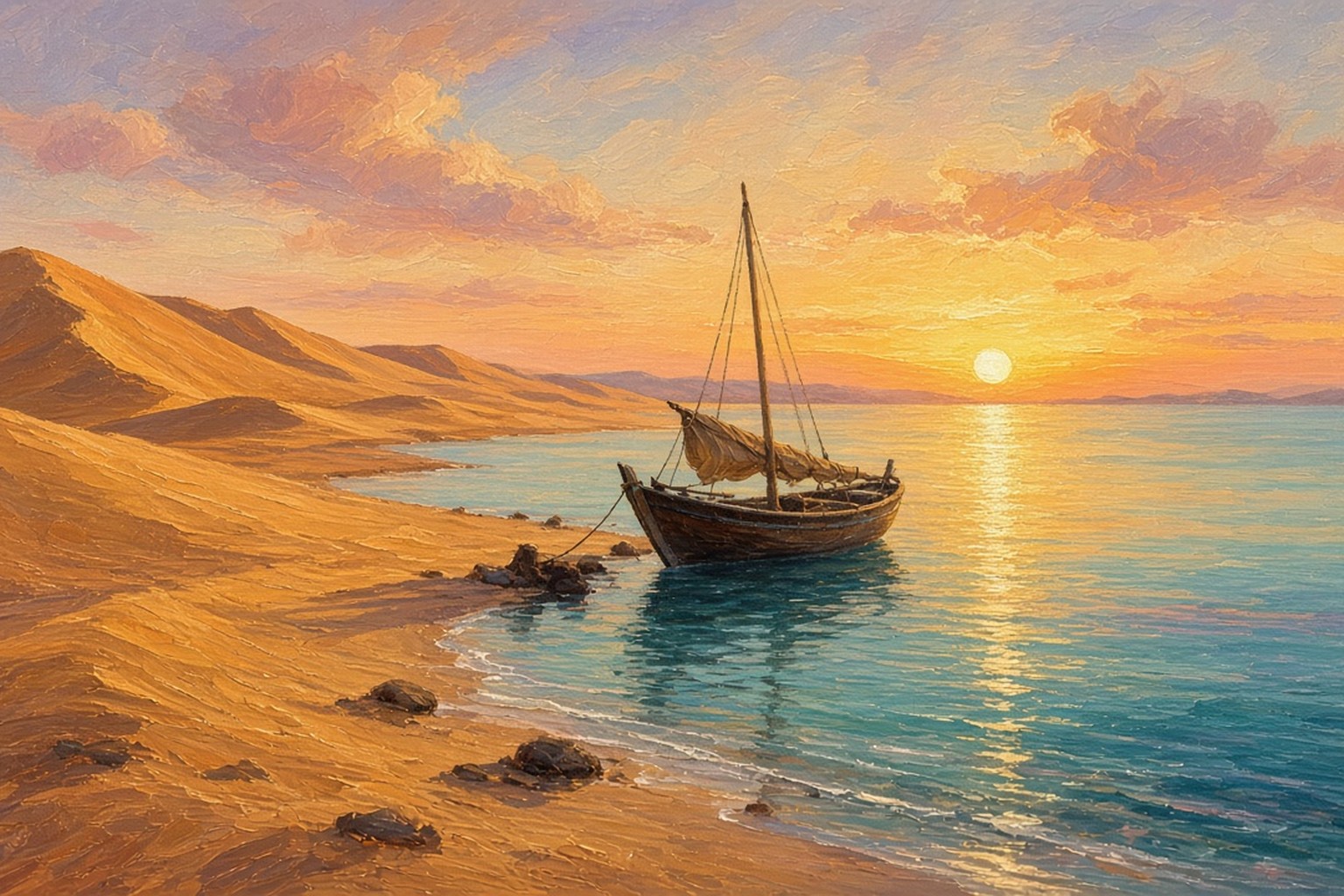
Qatar is a small but influential nation occupying a peninsula that juts into the Persian Gulf from the Arabian Peninsula. Once a modest land of pearl divers, fishermen, and desert nomads, it has transformed in a few decades into one of the world’s wealthiest countries. With its gleaming skyline, rich Bedouin heritage, and bold cultural ambitions, Qatar is sometimes described as a “pearl of the desert.”
Geography and Climate
Qatar covers about 11,600 square kilometers, making it one of the smaller countries in Asia. Its only land border is with Saudi Arabia to the south, while the rest of the peninsula is surrounded by the waters of the Persian Gulf. Doha, the capital, is home to the great majority of the population and serves as the country’s political and economic heart.
The landscape is mostly flat, low-lying desert covered with sand and gravel, with rolling dunes in the southeast. One of the most striking features is Khor Al Adaid, known as the Inland Sea, where towering dunes meet a tidal inlet of the Gulf in a rare natural setting.
Qatar has a hot desert climate with long, extremely hot and humid summers and mild, pleasant winters. Rainfall is scarce and irregular, so the country relies heavily on desalinated seawater for its drinking water and modern farms for part of its food supply.
History and Independence
The Qatar peninsula has been inhabited for thousands of years, and its coastal settlements long thrived on fishing, trade, and especially pearl diving. In the nineteenth century the Al Thani family rose to leadership, and Sheikh Jassim bin Mohammed Al Thani is honored as the founder of the modern state.
Qatar later came under Ottoman influence and then entered treaty relations with Britain, which handled its foreign affairs for much of the twentieth century. The collapse of the natural pearl trade in the 1930s brought hardship, but the discovery of oil in 1939 at Dukhan changed the country’s future.
Qatar became fully independent on 3 September 1971, and its National Day is celebrated each year on 18 December to mark Sheikh Jassim’s accession in 1878. Under the Al Thani emirs, the country has grown into an active voice in regional diplomacy and international mediation.
Economy and Natural Resources
Qatar’s economy is built on vast reserves of natural gas, with the North Field offshore forming part of the largest natural gas field in the world. The country is one of the leading exporters of liquefied natural gas, shipping it to customers across Asia and Europe, and it also produces oil and petrochemicals.
Hydrocarbon wealth has given Qatar one of the highest incomes per person in the world and funded modern infrastructure, schools, and hospitals. The Qatar Investment Authority, its sovereign wealth fund, invests globally in property, companies, and other assets to help secure income for future generations.
The national currency is the Qatari riyal. Through its Qatar National Vision 2030, the government is working to diversify the economy into finance, logistics, tourism, education, and sports, with Hamad International Airport and Qatar Airways connecting Doha to the world.
Culture and Language
Arabic is the official language, while English is widely used in business, education, and daily life thanks to a large international population. Islam shapes everyday customs, values, and the calendar, with the month of Ramadan and the two Eid holidays marking important times for family, prayer, and generosity.
Bedouin and maritime traditions remain a source of pride, from falconry and camel racing to the songs and stories of pearl divers. Traditional dress is still worn by many Qataris, with men often wearing the white thobe and headdress and women wearing the black abaya.
Hospitality is central to Qatari culture, and guests are welcomed with Arabic coffee flavored with cardamom and served with sweet dates. The country has also invested heavily in culture and education, with Education City in Doha hosting branch campuses of several international universities.
Food and Cuisine
Qatari cuisine reflects Bedouin, Gulf, Persian, and South Asian influences, with rice, meat, fish, and aromatic spices at its heart. Machboos, a fragrant dish of spiced rice cooked with chicken, lamb, or fish, is considered the national favorite and is often shared at family gatherings.
Other traditional dishes include harees, a slow-cooked blend of wheat and meat popular during Ramadan, and thareed, a hearty stew poured over thin bread. Sweet treats such as luqaimat, small fried dumplings drizzled with date syrup, are enjoyed with coffee or tea, and fresh dates appear at almost every meal.
Tourism and Attractions
Doha’s waterfront Corniche curves along the bay, offering views of the modern skyline and traditional dhow boats. The Museum of Islamic Art, designed by I. M. Pei, and the National Museum of Qatar, shaped like a desert rose crystal, are architectural landmarks, while Souq Waqif invites visitors into lanes of spices, textiles, and falcon shops.
Beyond the city, the dunes of the south offer desert safaris and evenings beneath the stars near the Inland Sea. Al Zubarah Archaeological Site, an eighteenth century pearling town, is a UNESCO World Heritage Site, and Qatar welcomed the world in 2022 as the first Arab country to host the FIFA World Cup.
Challenges and Opportunities
Qatar faces challenges including its dependence on hydrocarbons, extreme summer heat, scarce freshwater, and the environmental impact of rapid development. The welfare and rights of its large migrant workforce have drawn international attention, prompting a series of labor reforms that continue to evolve.
At the same time, enormous gas reserves, a strong financial position, and world-class infrastructure give Qatar significant opportunities. Investment in education, research, sports, culture, and tourism can help the country build a diversified economy while preserving the traditions that define its identity.
A Desert Peninsula of Bold Ambition
Qatar is a land where the memory of pearl divers and desert caravans lives alongside soaring towers and world-class museums. From the quiet dunes of the Inland Sea to the bustling lanes of Souq Waqif, it offers a fascinating blend of heritage and modernity. Small in size yet great in vision, Qatar stands as a desert peninsula of bold ambition.