
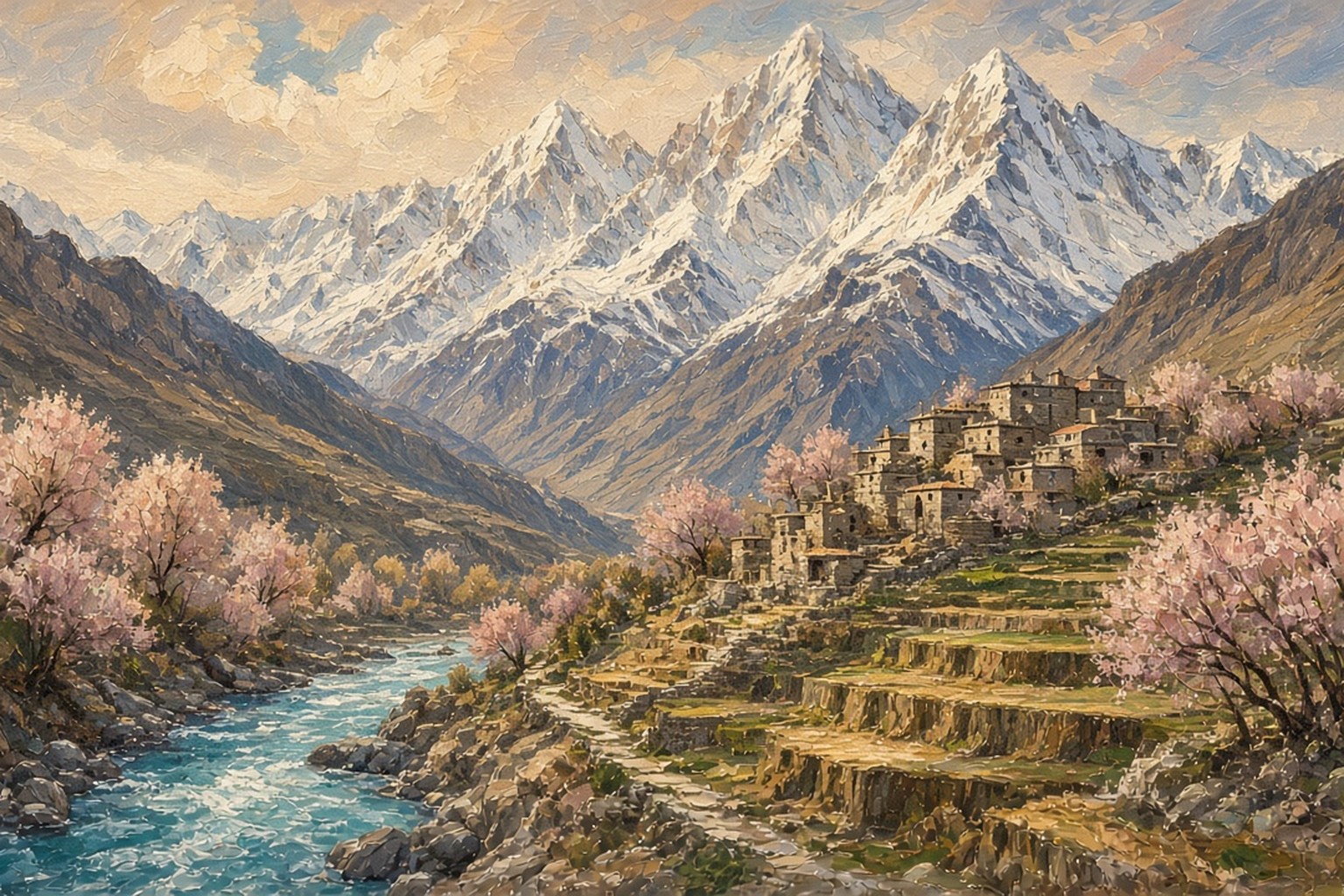
Pakistan is a large and diverse country in South Asia, stretching from the shores of the Arabian Sea to some of the highest mountains on Earth. It is home to the ancient Indus Valley Civilization, magnificent Mughal monuments, fertile river plains, and breathtaking alpine valleys. With its rich traditions of music, poetry, and hospitality, Pakistan is a land of remarkable history and natural grandeur.
Geography and Climate
Pakistan is bordered by India to the east, China to the northeast, Afghanistan to the northwest, and Iran to the west, with a coastline of about 1,000 kilometers along the Arabian Sea. It is one of the most populous countries in the world, and its largest city, Karachi, is a major port, while Islamabad serves as the capital.
In the north, three of the world’s great mountain ranges, the Karakoram, the Himalayas, and the Hindu Kush, come together. K2, at 8,611 meters, is the second-highest mountain on Earth, and Nanga Parbat and several other peaks rise above 8,000 meters, surrounded by some of the longest glaciers outside the polar regions.
The Indus River flows from the mountains through the fertile plains of Punjab and Sindh to the Arabian Sea, while the Thar Desert lies in the southeast and the dry Balochistan Plateau in the west. The climate ranges from cold alpine conditions in the north to hot summers on the plains, with monsoon rains between July and September bringing water to farms across the country.
History and Independence
The Indus Valley Civilization flourished more than four thousand years ago, building planned cities such as Mohenjo-daro and Harappa with brick houses, drainage systems, and granaries. Mohenjo-daro is now a UNESCO World Heritage Site, as are the ruins of Taxila, once a great center of Buddhist learning and Gandhara art.
Islam arrived in Sindh in the eighth century, and later dynasties, including the Delhi Sultanate and the Mughal Empire, left a magnificent architectural legacy. Lahore became one of the empire’s great cities, home to the Lahore Fort, the Shalimar Gardens, and the grand Badshahi Mosque.
After a long period of British rule over the subcontinent, Pakistan was created as an independent state on 14 August 1947, led by Muhammad Ali Jinnah, who is honored as the founder of the nation. In 1956 it adopted its first constitution as an Islamic republic, and in the 1960s the capital moved from Karachi to the newly built city of Islamabad.
Economy and Natural Resources
Agriculture remains a cornerstone of Pakistan’s economy, supported by one of the largest irrigation systems in the world fed by the Indus and its tributaries. Major crops include wheat, cotton, rice, sugarcane, and maize, and the country is famous for its aromatic basmati rice and sweet mangoes.
Textiles and clothing are the largest exports, with cotton yarn, fabrics, towels, and garments sold around the world. Sialkot is renowned for manufacturing sporting goods, especially footballs, as well as surgical instruments.
The country also has deposits of coal, natural gas, copper, gold, and salt, and the Khewra Salt Mine is famous for its pink Himalayan salt. Remittances from Pakistanis working abroad are an important source of income, and a fast-growing information technology sector and freelance workforce are creating new opportunities.
Culture and Language
Urdu is the national language and English is an official language, while Punjabi is the most widely spoken mother tongue, alongside Pashto, Sindhi, Saraiki, Balochi, and many others. Islam is the state religion, and Eid celebrations bring families together for prayers, feasts, and visits.
Pakistan has a rich musical heritage, especially qawwali, the devotional music of the Sufi tradition, made famous worldwide by Nusrat Fateh Ali Khan. Poetry is deeply loved, and Muhammad Iqbal, who wrote in Urdu and Persian, is celebrated as the national poet.
Colorfully painted trucks decorated with flowers, landscapes, and calligraphy have become a famous form of folk art. Cricket is a national passion, and Pakistan won the Cricket World Cup in 1992, while the country also has a proud history in squash and field hockey.
Food and Cuisine
Pakistani cuisine is rich and flavorful, shaped by Mughal, Persian, and Central Asian influences. Biryani, fragrant rice layered with spiced meat, is a favorite across the country, and nihari, a slow-cooked beef stew traditionally eaten at breakfast, is a specialty of Lahore and Karachi.
Chicken karahi, cooked in a wok-like pan with tomatoes and green chilies, is a popular meal with fresh naan, while Peshawar is known for chapli kebabs and Balochistan for sajji, roasted lamb or chicken. Meals are often followed by sweet milky chai or a cool glass of lassi.
Haleem, a thick stew of wheat, lentils, and meat, is especially popular during Ramadan, and street stalls sell samosas, pakoras, and chaat. Desserts such as kheer, gulab jamun, and jalebi are shared generously at weddings and festivals.
Tourism and Attractions
Lahore’s Badshahi Mosque, Lahore Fort, and Shalimar Gardens showcase the splendor of Mughal architecture, while Islamabad is home to the striking Faisal Mosque at the foot of the Margalla Hills. The Makli Necropolis near Thatta and the Rohtas Fort are also UNESCO World Heritage Sites.
The Karakoram Highway leads travelers through the mountains to the beautiful Hunza Valley, with its orchards, ancient forts, and views of snowy peaks. Fairy Meadows offers spectacular views of Nanga Parbat, while the Swat Valley, the Deosai Plains, and the ancient ruins of Mohenjo-daro reward adventurous visitors.
Challenges and Opportunities
Pakistan faces challenges such as economic instability, energy shortages, water scarcity, and the impacts of climate change, including severe floods and melting glaciers. Expanding access to education and health care remains a key priority.
At the same time, its young population, strategic location, agricultural potential, and spectacular landscapes offer great promise. Growth in technology, renewable energy, and tourism could help Pakistan build a more prosperous and sustainable future.
Where the Great Ranges Meet the Indus
Pakistan is a land of towering peaks, ancient cities, and soulful music. From the Mughal grandeur of Lahore to the glaciers of the Karakoram and the timeless ruins of Mohenjo-daro, it offers journeys filled with history, adventure, and heartfelt hospitality. Diverse, spirited, and inspiring, Pakistan is a true treasure of South Asia.