
North Macedonia is a small, landlocked country in the heart of the Balkan Peninsula in Southeastern Europe. Known for its rugged mountains, crystal-clear lakes, Byzantine churches, and Ottoman-era bazaars, it blends many layers of history into a single welcoming land. With the ancient lakeside town of Ohrid, often described as the “Jerusalem of the Balkans” for its many churches, and its lively capital of Skopje, North Macedonia is one of Europe’s most rewarding hidden treasures.
Geography and Climate
North Macedonia covers about 25,700 square kilometers and is bordered by Kosovo and Serbia to the north, Bulgaria to the east, Greece to the south, and Albania to the west. The Vardar River, the country’s longest, flows from the northwest through Skopje and on toward the Aegean Sea.
Much of the land is mountainous, with valleys and basins between the ranges. Mount Korab, on the border with Albania, is the highest peak at about 2,764 meters, and national parks such as Mavrovo, Pelister, and Galičica protect forests, alpine meadows, and wildlife like the Balkan lynx. Lake Ohrid, shared with Albania, is among the oldest and deepest lakes in Europe, while nearby Lake Prespa lies at an even higher altitude.
The climate combines Mediterranean and continental influences, with hot, dry summers and cold, snowy winters in the mountains. The warm Vardar valley is ideal for vineyards and orchards, and the region around the lakes enjoys mild, sunny weather that attracts visitors throughout the summer.
History and Independence
The region has been inhabited since prehistoric times, and the ancient kingdoms of Paeonia and Macedon, followed by the Roman and Byzantine empires, left their mark through cities, roads, and mosaics. Archaeological sites such as Stobi and Heraclea Lyncestis preserve theaters, basilicas, and colorful floor mosaics from this era.
In the ninth century, Saints Clement and Naum founded a famous school of learning in Ohrid that helped spread Slavic literacy and the Cyrillic tradition. The region came under Ottoman rule at the end of the fourteenth century and remained part of the Ottoman Empire for more than five hundred years, a period that shaped its architecture, food, and bazaars.
After the Balkan Wars of 1912 and 1913, the territory was divided, and the area of today’s country later became a republic within Yugoslavia. It declared independence following a referendum on 8 September 1991, and under the Prespa Agreement with Greece it adopted the name North Macedonia in 2019, joining NATO in 2020.
Economy and Natural Resources
North Macedonia has a growing, open economy with strengths in manufacturing, agriculture, and services. Factories in special economic zones produce car parts, electrical components, and machinery for European markets, while textiles and clothing remain important industries.
Agriculture benefits from fertile valleys and a sunny climate, producing tobacco, grapes, peppers, tomatoes, apples, and cherries. The Tikveš region is the heart of a long winemaking tradition, known especially for the red Vranec grape.
The country also has deposits of lead, zinc, copper, and other minerals, and mining contributes to exports. Tourism around the lakes, mountains, and historic towns is growing, and information technology and outsourcing services are expanding in Skopje.
Culture and Language
Macedonian, a South Slavic language written in the Cyrillic alphabet, is the official language, and Albanian is also an official language at the national level. Most people are Orthodox Christians, while a large Muslim community lives mainly in the west, and Turkish, Romani, Serbian, and Aromanian communities add to the country’s diversity.
Traditional music is known for its lively, uneven rhythms, often played on instruments such as the kaval flute, the tapan drum, and the zurla. Circle dances are performed at weddings and festivals, and the Kopachkata dance and the Teshkoto men’s dance are recognized by UNESCO as intangible cultural heritage.
Religious art is a great source of pride, especially the medieval frescoes and carved wooden icon screens found in churches and monasteries. Mother Teresa was born in Skopje in 1910, and a memorial house in the city honors her life and work.
Food and Cuisine
Macedonian cuisine reflects Balkan, Mediterranean, and Ottoman influences, with fresh vegetables, cheeses, and slow-cooked dishes. Tavče gravče, baked beans cooked in a clay pot with peppers and onions, is considered the national dish.
Ajvar, a rich spread of roasted red peppers, is prepared by families every autumn, and šopska salad with tomatoes, cucumbers, and white cheese is served at most meals. Burek pastries, grilled kebapi, stuffed peppers, and Ohrid trout are favorites, often accompanied by local wine or rakija.
Pastrmajlija, an oval flatbread topped with cured meat and egg, is a specialty of the town of Štip. Sweet treats such as baklava and tulumba reflect the Ottoman past, and strong coffee is shared slowly with friends in cafés across the country.
Tourism and Attractions
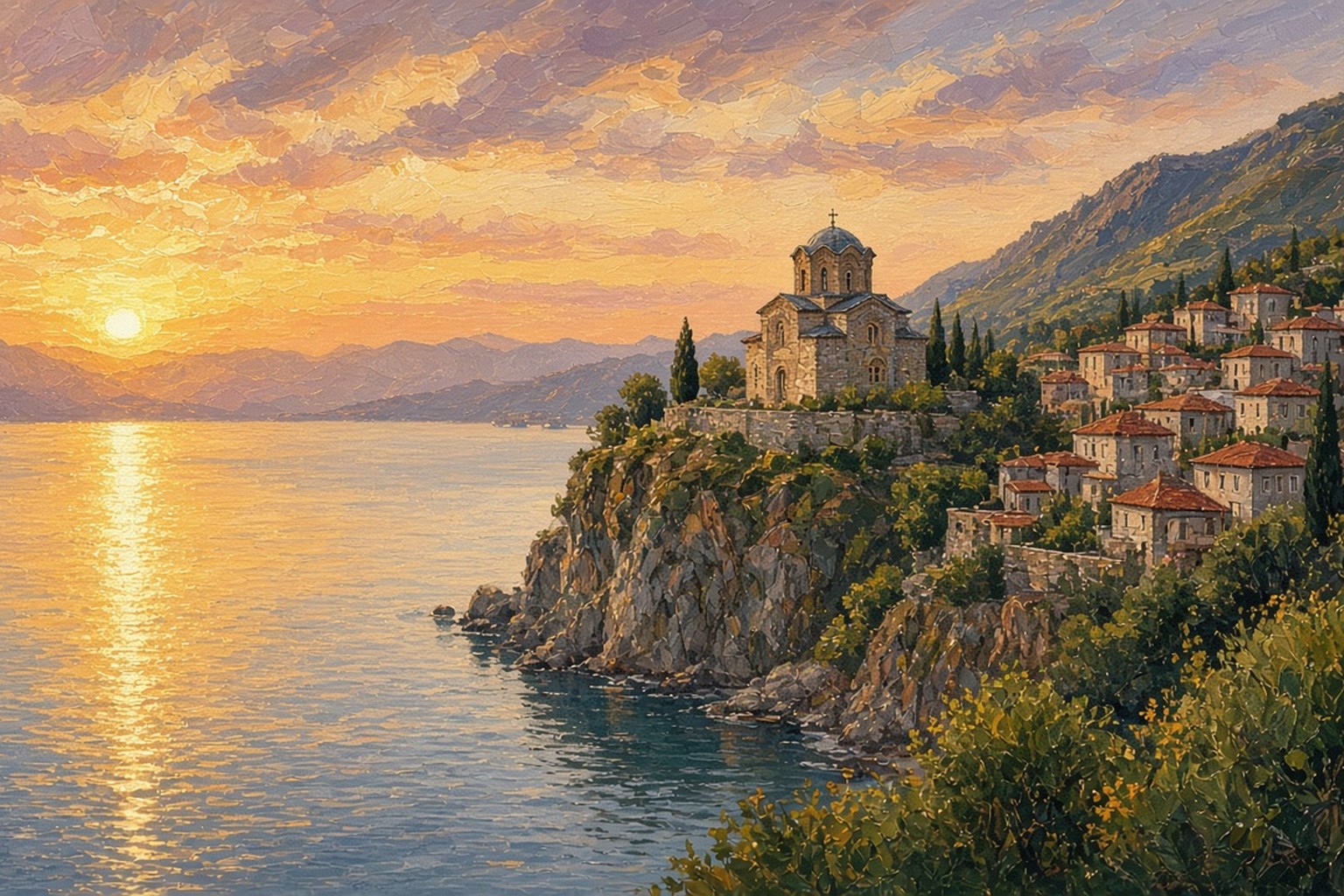
Ohrid, with its old town, Byzantine churches, and the Church of Saint John at Kaneo perched above the lake, is part of a UNESCO World Heritage Site that covers both the natural and cultural heritage of the Ohrid region. Nearby, the Monastery of Saint Naum overlooks springs of clear blue water.
Skopje offers the Stone Bridge over the Vardar, the hilltop Kale Fortress, and the lively Old Bazaar, one of the largest in the Balkans. Matka Canyon, just outside the capital, invites visitors to kayak past cliffs and caves, while Bitola, Kratovo, and the ancient observatory of Kokino reward explorers.
Challenges and Opportunities
North Macedonia faces challenges such as emigration of young people, air pollution in winter, unemployment, and the need to strengthen institutions. Progress toward membership in the European Union remains a key national goal.
At the same time, its strategic location, skilled workforce, natural beauty, and rich heritage offer promising opportunities. Investment in manufacturing, renewable energy, and sustainable tourism could help the country build a brighter and more prosperous future.
A Jewel on the Shores of Ohrid
North Macedonia is a land of ancient churches, mountain lakes, and spirited folk traditions. From the golden sunsets over Lake Ohrid to the bustling Old Bazaar of Skopje and the quiet vineyards of Tikveš, it offers authentic experiences rich in history and warmth. Charming and full of surprises, North Macedonia is a true gem of the Balkans.