
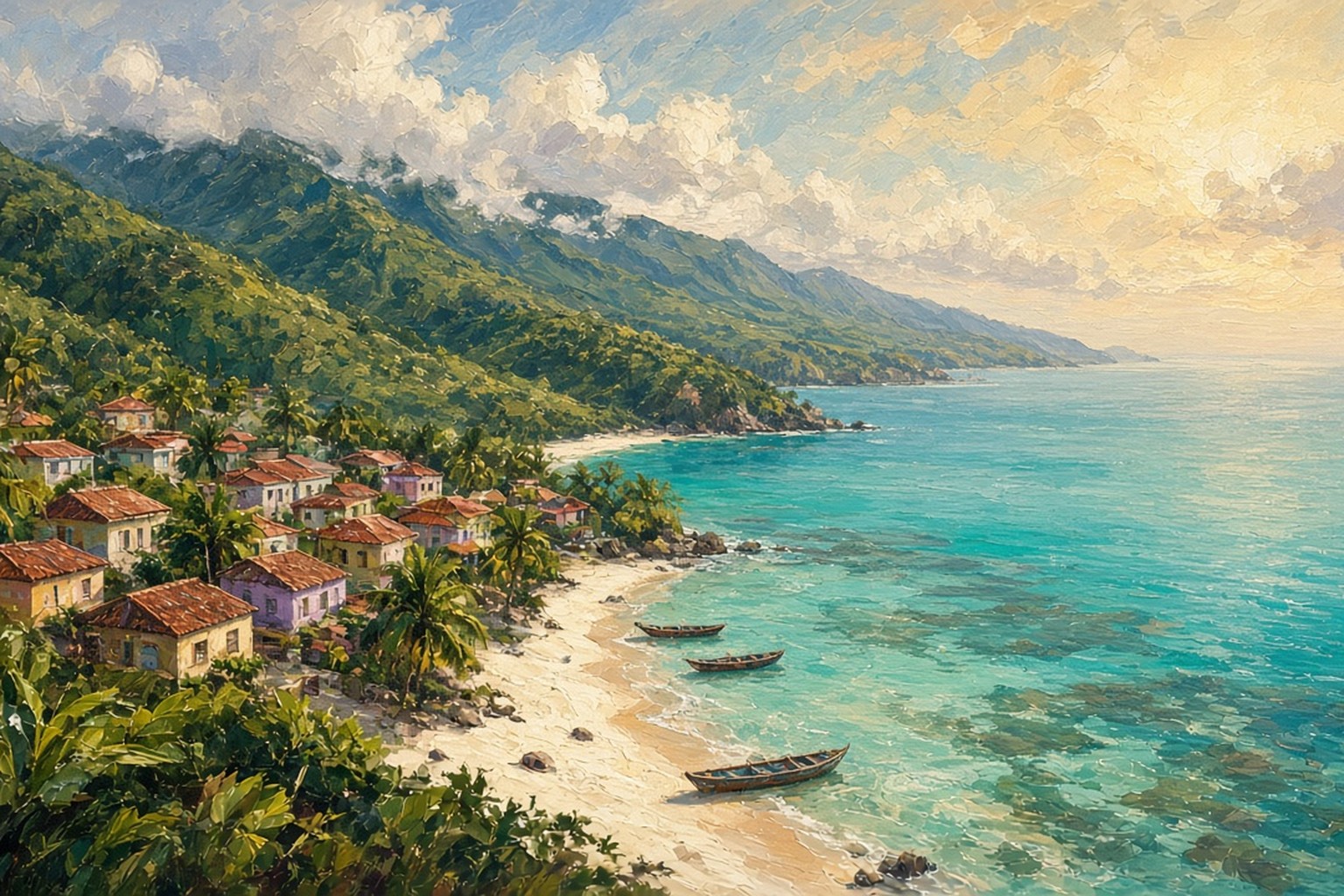
Honduras, a mountainous nation in the heart of Central America, takes its name from the Spanish word for “depths,” reportedly inspired by the deep waters off its Caribbean coast. Home to the ancient Maya city of Copán, the coral-fringed Bay Islands, and vast tropical forests, Honduras blends rich history with remarkable natural beauty. Its warm people, lively traditions, and diverse landscapes make it one of the most fascinating countries in the region.
Geography and Climate
Honduras is bordered by Guatemala to the west, El Salvador to the southwest, and Nicaragua to the southeast. It has a long northern coastline on the Caribbean Sea and a short southern outlet to the Pacific Ocean through the Gulf of Fonseca. Covering approximately 112,490 square kilometers, it is the second largest country in Central America.
Much of the country is mountainous, with highlands, valleys, and pine-covered ridges dominating the interior. In the northeast lies La Mosquitia, a remote region of rainforests, rivers, and wetlands that includes the Río Plátano Biosphere Reserve. Off the northern coast, the Bay Islands of Roatán, Utila, and Guanaja sit along the Mesoamerican Barrier Reef, one of the largest reef systems in the world.
The climate is tropical in the lowlands and milder in the mountains, with a rainy season that generally runs from May to November. Honduras is exposed to Atlantic hurricanes, and storms such as Hurricane Mitch in 1998 have caused widespread destruction.
History and Independence
Long before European arrival, Honduras was home to Indigenous peoples including the Lenca and the Maya, whose city of Copán flourished as a major center of art and astronomy. Christopher Columbus reached the Honduran coast in 1502 during his fourth voyage. Spanish conquest followed, and the Lenca leader Lempira became a symbol of resistance, later honored when the national currency was named after him.
Honduras declared independence from Spain on September 15, 1821, along with its Central American neighbors. It joined the short-lived Federal Republic of Central America before becoming a separate republic in 1838. In the late nineteenth and early twentieth centuries, foreign banana companies gained great influence, and the writer O. Henry coined the term “banana republic” after his time in the country.
The twentieth century brought periods of military rule, a brief war with El Salvador in 1969, and a gradual return to civilian government in the early 1980s. Since then, Honduras has worked to strengthen its democratic institutions while confronting social and economic pressures.
Economy and Natural Resources
Agriculture remains central to the Honduran economy, with coffee as one of the leading exports and bananas, palm oil, melons, and shrimp also playing important roles. Honduras is the largest coffee producer in Central America, and its high-altitude beans are increasingly prized by specialty buyers.
Manufacturing, particularly textile and apparel assembly for export, provides many jobs in the north of the country. Remittances from Hondurans living abroad, especially in the United States, are a major source of income for families. The country’s forests, rivers, and coastline also offer resources for hydropower, fishing, and tourism.
Culture and Language
Spanish is the official language of Honduras, while Indigenous and Afro-descendant communities preserve their own languages and traditions. The Garífuna people, descendants of West African and Indigenous Caribbean ancestors, live along the northern coast and are known for their distinctive music, dance, and language, recognized by UNESCO as part of humanity’s intangible heritage.
Catholicism and evangelical Christianity shape much of Honduran life, with religious festivals and processions marking the calendar. Football is a national passion, and local matches bring communities together. Traditional crafts such as pottery, woodcarving, and woven goods reflect the skills of Lenca and other Indigenous artisans.
Other Indigenous groups, including the Lenca in the western highlands and the Miskito in La Mosquitia, maintain strong cultural identities. Community festivals, known as ferias, celebrate patron saints with music, parades, and traditional food. In La Ceiba, the annual carnival is one of the largest and most colorful celebrations in Central America.
Food and Cuisine
Honduran cuisine is hearty and comforting, built around corn, beans, rice, plantains, and fresh tropical produce. The baleada, a thick flour tortilla folded around refried beans, cheese, and cream, is the country’s most beloved street food. A typical plate might also include grilled meat, fried plantains, avocado, and salty fresh cheese.
Along the coast, seafood and coconut feature prominently in many dishes. Sopa de caracol, a rich conch soup made with coconut milk, is a celebrated specialty, while the Garífuna dish tapado combines fish, seafood, plantains, and coconut in a fragrant stew. Tamales and nacatamales wrapped in banana leaves are popular during holidays and family gatherings.
Tourism and Attractions
The ruins of Copán, a UNESCO World Heritage Site, are famous for their intricately carved stelae and the Hieroglyphic Stairway, one of the longest known Maya inscriptions. Nearby, the town of Copán Ruinas offers cobblestone streets and access to coffee farms and hot springs.
The Bay Islands attract divers and snorkelers from around the world, with Roatán known for its beaches and Utila for opportunities to see whale sharks. On the mainland, Pico Bonito National Park offers waterfalls and rainforest trails, while Lake Yojoa, the largest natural lake in the country, is a haven for birdwatchers. Colonial towns such as Comayagua and Gracias reveal the country’s Spanish heritage.
Challenges and Opportunities
Honduras faces significant challenges, including poverty, inequality, crime, and vulnerability to hurricanes and flooding. Storms such as Eta and Iota in 2020 caused severe damage, and many Hondurans have migrated abroad in search of security and economic opportunity.
At the same time, the country has considerable potential in specialty coffee, sustainable tourism, renewable energy, and conservation. Protecting its forests and reefs while expanding education and opportunity for young people could help build a brighter future.
A Land of Depths and Discovery
Honduras is a country of ancient cities, misty mountains, and turquoise seas, where Maya heritage and Garífuna rhythms share the same horizon. From the carved stones of Copán to the coral gardens of Roatán, it rewards those who look beyond the surface. As it continues to grow, Honduras remains a land of hidden depths waiting to be discovered.