
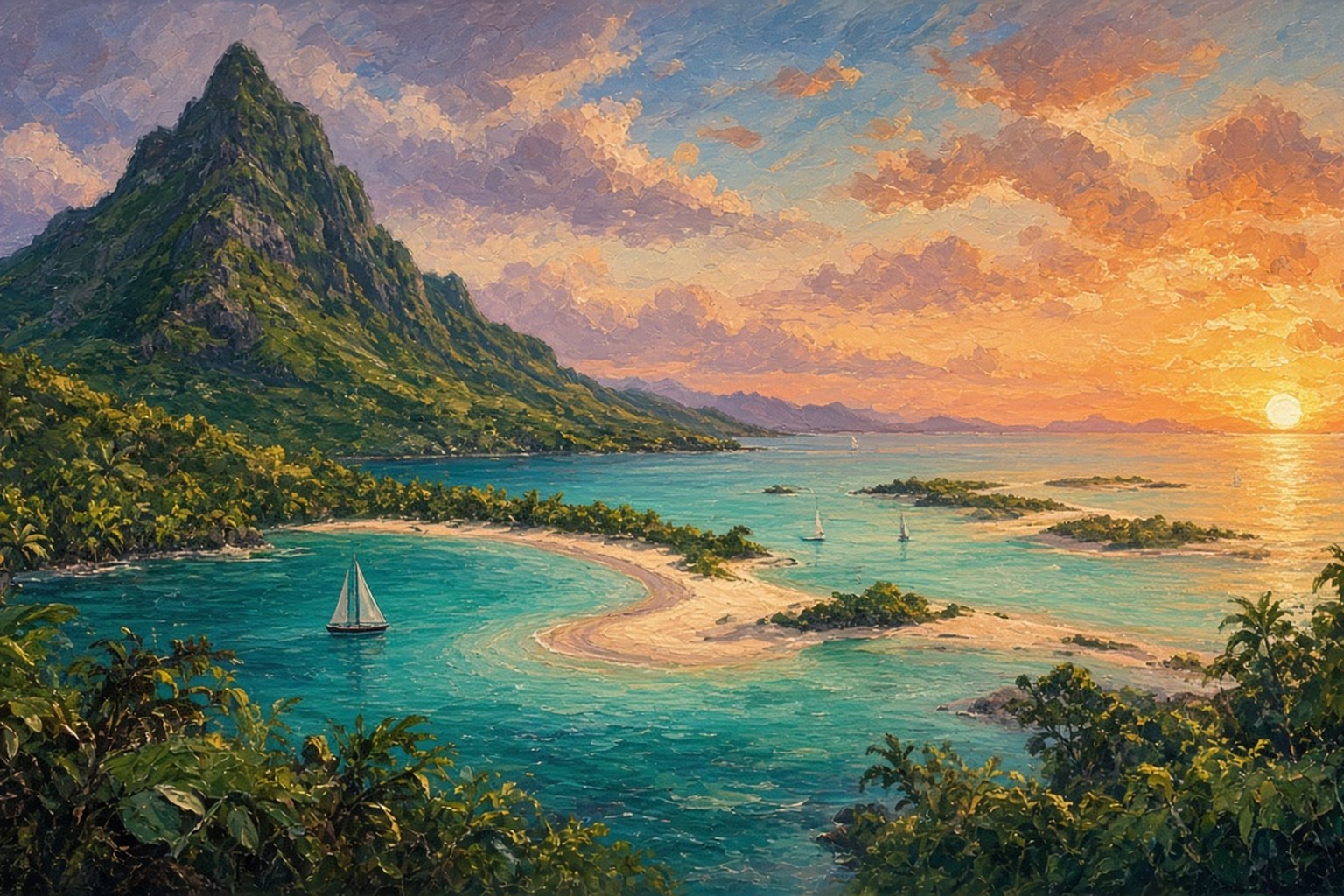
Saint Vincent and the Grenadines is an island nation in the Windward Islands of the eastern Caribbean, made up of the volcanic island of Saint Vincent and a chain of smaller islands and cays stretching south toward Grenada. Dark beaches, a smoking volcano, quiet harbors, and some of the Caribbean’s finest sailing waters define the country. Many visitors simply call it “SVG,” and sailors often describe the Grenadines as a perfect cruising ground.
Geography and Climate
The country covers about 389 square kilometers, with Saint Vincent making up most of that area. The Grenadines include around 32 islands and cays, among them Bequia, Mustique, Canouan, Mayreau, and Union Island. The capital and main port, Kingstown, sits on the southwest coast of Saint Vincent.
Saint Vincent is rugged and mountainous, and La Soufrière, an active volcano rising to about 1,234 meters, dominates its northern end. The volcano erupted explosively in April 2021, covering parts of the island in ash and forcing thousands of people to leave their homes for a time. Many beaches on Saint Vincent have black volcanic sand, while the Grenadines are known for white sand and coral reefs.
The climate is tropical, with warm temperatures all year and cooling trade winds. The drier season runs from about December to May, and the wetter season from June to November overlaps with the Atlantic hurricane season. The lower, drier Grenadines receive less rain than the green mountains of Saint Vincent.
History and Independence
Indigenous peoples lived on the islands for centuries, and the Kalinago, also called Caribs, resisted European settlement for a long time. They called Saint Vincent Hairouna, and the island was left largely to them while other Caribbean islands were colonized. People of African descent, some of them escaped from slavery and some survivors of shipwrecks, joined them and formed the community known as the Garifuna or Black Caribs.
Britain and France competed for control, and Britain held the islands firmly after the Treaty of Versailles in 1783. Conflicts with the Garifuna continued, and after the Second Carib War in 1796 and 1797, thousands were deported to the island of Roatán off Honduras. Their descendants now live in Central America and are known for their language and music.
Plantations growing sugar, and later arrowroot and cotton, depended on enslaved labor until slavery was abolished in the 1830s. The islands became an associated state in 1969 and gained independence from the United Kingdom on 27 October 1979. The nation is a constitutional monarchy and a member of the Commonwealth.
Economy and Natural Resources
Agriculture has long been central to the economy of Saint Vincent, which was once one of the world’s leading producers of arrowroot starch. Bananas became the main export crop in the twentieth century, alongside root vegetables, coconuts, and plantains. Falling banana prices pushed many farmers and policymakers to look for other sources of income.
Tourism has grown steadily, especially in the Grenadines, where private islands, luxury resorts, and yacht charters attract visitors. Fishing, small-scale manufacturing, and financial services also contribute, and money sent home by Vincentians living abroad supports many families. The Eastern Caribbean dollar is the national currency.
Natural resources include fertile volcanic soil, rich fishing waters, and coastal scenery. The islands are also working to expand renewable energy, including solar and hydroelectric power, to lower the cost of imported fuel.
Culture and Language
English is the official language, and most people also speak Vincentian Creole in everyday conversation. The population is mainly of African descent, with smaller communities of European, Indian, and Kalinago heritage. Churches play a central role in community life, and many families gather there for Sunday services.
Vincy Mas, the national carnival, takes place in late June and July and fills Kingstown with costumes, steel pan, calypso, and soca. Bequia has a distinctive seafaring tradition, including boatbuilding that has been passed through generations. Storytelling, folk songs, and the Big Drum dances of the Grenadines keep older customs alive.
The country’s literature and music reflect the sea and the land, from calypso verses to the island poetry of local writers. Cricket is the favorite sport, and Vincentian players have represented the West Indies team. Football and netball are also widely enjoyed.
Food and Cuisine
The national dish is roasted breadfruit served with fried jackfish, and the pairing is often eaten with friends at family gatherings. Breadfruit also appears boiled, fried, or mashed into dishes that are served with stews and fish. Other staples include dasheen, plantains, sweet potatoes, and callaloo soup.
Seafood is a highlight, with grilled lobster, conch, and flying fish served in simple beach restaurants. Local fruit such as mangoes, soursop, and golden apples is turned into juices and sweet treats. Rum, usually made on the island, is part of many celebrations.
Tourism and Attractions
The Tobago Cays Marine Park, a protected cluster of small islands and reefs, is famous for turquoise lagoons where sea turtles feed in the shallows. Mustique is known for its quiet elegance and private villas, while Bequia offers a relaxed harbor town called Port Elizabeth. Union Island and Mayreau offer calm beaches and lively yacht anchorages.
On Saint Vincent, the Botanic Gardens in Kingstown, founded in 1765, are among the oldest in the Western Hemisphere. Fort Charlotte looks over Kingstown from a hilltop, and trails climb the slopes of La Soufrière. Wallilabou Bay on the west coast was used as a filming location for the first Pirates of the Caribbean movies.
Challenges and Opportunities
The country faces the same risks as many small island states, including hurricanes, volcanic activity, and rising sea levels. The 2021 eruption showed how quickly a natural event can disrupt homes, farms, and water supplies. Recovery requires strong planning and help from regional and international partners.
Opportunities lie in sustainable tourism, renewable energy, and farming that can withstand changing weather. Training young people and improving connections to the outside world could open new kinds of work. The islands’ close-knit communities and natural beauty are strong foundations for that effort.
A Chain of Sails and Sunsets
Saint Vincent and the Grenadines pairs a living volcano with some of the calmest and brightest waters in the Caribbean. Its history of resistance, its carnival rhythms, and its relaxed island life give the country a warm and distinctive character. For anyone curious about the quieter side of the Caribbean, it is a rewarding place to discover.