
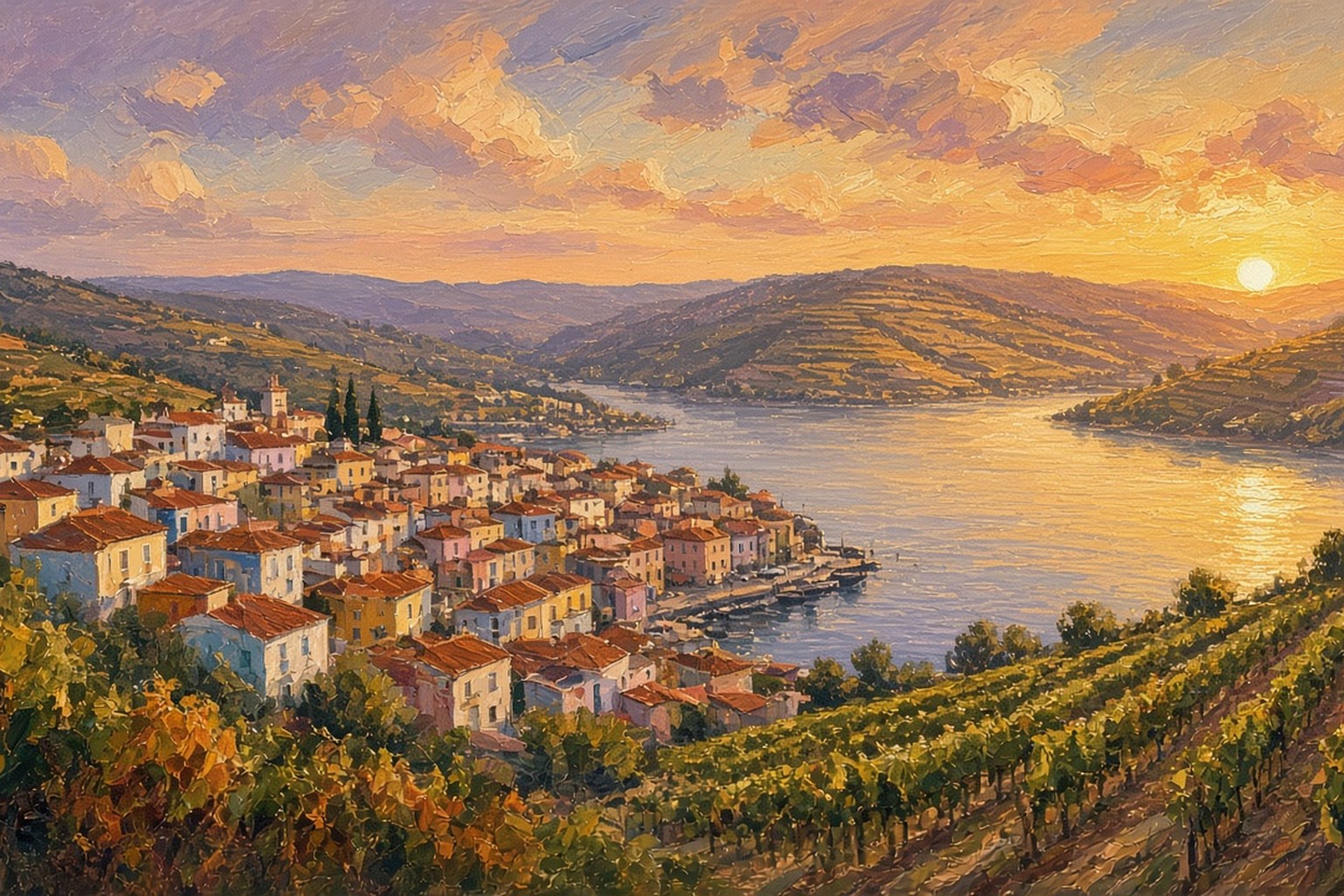
Portugal is a sunlit nation on the western edge of the Iberian Peninsula, facing the Atlantic Ocean with a long history of exploration and seafaring. Once the heart of a global maritime empire, it is today a welcoming democracy known for its golden beaches, terraced vineyards, and soulful music. Often called Europe’s “land of discoveries,” Portugal blends old-world charm with a relaxed and modern spirit.
Geography and Climate
Portugal covers about 92,000 square kilometers on the mainland, bordered only by Spain to the north and east and by the Atlantic Ocean to the west and south. The country also includes the volcanic Atlantic archipelagos of the Azores and Madeira, which are autonomous regions. Lisbon is the capital and largest city, while Porto, Braga, Coimbra, and Faro are other important centers.
The north is green and mountainous, cut by river valleys such as the Douro and Minho, while the south opens into the rolling plains of the Alentejo and the cliffs and coves of the Algarve. The Serra da Estrela range holds the highest point on the mainland, and the Tagus River flows into a broad estuary at Lisbon.
Portugal enjoys a Mediterranean climate shaped by the Atlantic, with hot dry summers and mild, wetter winters. The Algarve is famous for its abundant sunshine, while the northern regions receive more rainfall, nourishing forests, farmland, and vineyards across the hills.
History and Independence
The lands of Portugal were home to Celtic and Lusitanian peoples before becoming part of the Roman Empire, followed by Germanic kingdoms and centuries of Moorish rule. Portugal emerged as an independent kingdom in the twelfth century under Afonso Henriques, recognized by the papacy in 1179, making its borders among the oldest in Europe.
In the fifteenth and sixteenth centuries Portuguese navigators led the Age of Discovery. Vasco da Gama reached India by sea in 1498, Pedro Álvares Cabral arrived in Brazil in 1500, and trading posts stretched from Africa to Asia, creating one of the first global empires and bringing great wealth to Lisbon.
The great earthquake of 1755 devastated Lisbon, and the monarchy was replaced by a republic in 1910. After decades of authoritarian rule under the Estado Novo, the peaceful Carnation Revolution of 25 April 1974 restored democracy, and Portugal joined the European Community in 1986.
Economy and Natural Resources
Portugal has a diversified, service-based economy in which tourism plays a major role alongside manufacturing, agriculture, and fishing. Key exports include vehicles and auto parts, machinery, textiles, footwear, cork, and wine, and the country is the world’s leading producer of cork.
Renewable energy is a notable strength, with wind, hydropower, and solar supplying a large share of the country’s electricity. Forests of cork oak and eucalyptus, Atlantic fisheries, and mineral resources such as copper, tungsten, and marble also support local industries.
Portugal uses the euro as its currency. In recent years Lisbon and Porto have become hubs for technology startups and international companies, attracting young professionals and digital entrepreneurs from around the world.
Culture and Language
Portuguese is the official language and, thanks to the country’s maritime past, is spoken by well over two hundred million people worldwide, from Brazil to Angola and Mozambique. The poet Luís de Camões, author of the epic The Lusiads, is celebrated as the national literary hero, and Nobel laureate José Saramago brought Portuguese literature to a global audience.
Fado, a melancholic style of song often accompanied by the Portuguese guitar, expresses the feeling of saudade, a deep longing or nostalgia. Fado is recognized by UNESCO as Intangible Cultural Heritage, and the legendary singer Amália Rodrigues remains its most famous voice.
Catholic traditions shape many festivals, such as the lively summer celebrations of Saint Anthony in Lisbon and Saint John in Porto. Hand-painted azulejo tiles decorate churches, train stations, and homes, giving Portuguese towns their distinctive and colorful character.
Food and Cuisine
Portuguese cuisine celebrates the sea and the countryside, with olive oil, garlic, and fresh herbs at its core. Bacalhau, or dried salted cod, is the national favorite and is said to be prepared in hundreds of ways, while grilled sardines are a summer classic at street festivals.
Other beloved dishes include caldo verde soup, the hearty francesinha sandwich of Porto, and cataplana seafood stews from the Algarve. The custard tart known as pastel de nata is a famous treat, often enjoyed with strong coffee, and port wine from the Douro Valley is admired around the world.
Tourism and Attractions
Lisbon charms visitors with its hills, historic trams, and the UNESCO-listed Belém Tower and Jerónimos Monastery, monuments to the Age of Discovery. Nearby Sintra enchants with colorful palaces and misty forests, while Porto’s riverside Ribeira district and port wine cellars draw travelers to the north.
The Algarve offers dramatic cliffs, sea caves, and sandy beaches, and the Douro Valley’s terraced vineyards form a UNESCO World Heritage landscape. The lush islands of Madeira and the Azores attract hikers, whale watchers, and nature lovers seeking volcanic scenery and crater lakes. Historic university towns such as Coimbra and the walled city of Évora add further depth to any journey.
Challenges and Opportunities
Portugal faces challenges such as an aging population, emigration of young workers, rising housing costs in major cities, and the growing risk of droughts and wildfires linked to climate change. Balancing the benefits of tourism with the needs of local communities is also an important priority.
At the same time, the country’s stability, renewable energy leadership, and growing technology sector open promising paths for the future. With its strategic Atlantic location, strong cultural identity, and reputation for hospitality, Portugal is well placed to continue thriving in a changing world.
A Land of Navigators and Saudade
Portugal is a country where the spirit of the explorers still lingers in the Atlantic breeze, the lyrics of fado, and the tiled façades of its old towns. From the vineyards of the Douro to the cliffs of the Algarve and the green islands far offshore, it offers endless beauty and warmth. Proud of its past and open to the world, Portugal remains a timeless land of navigators and saudade.