
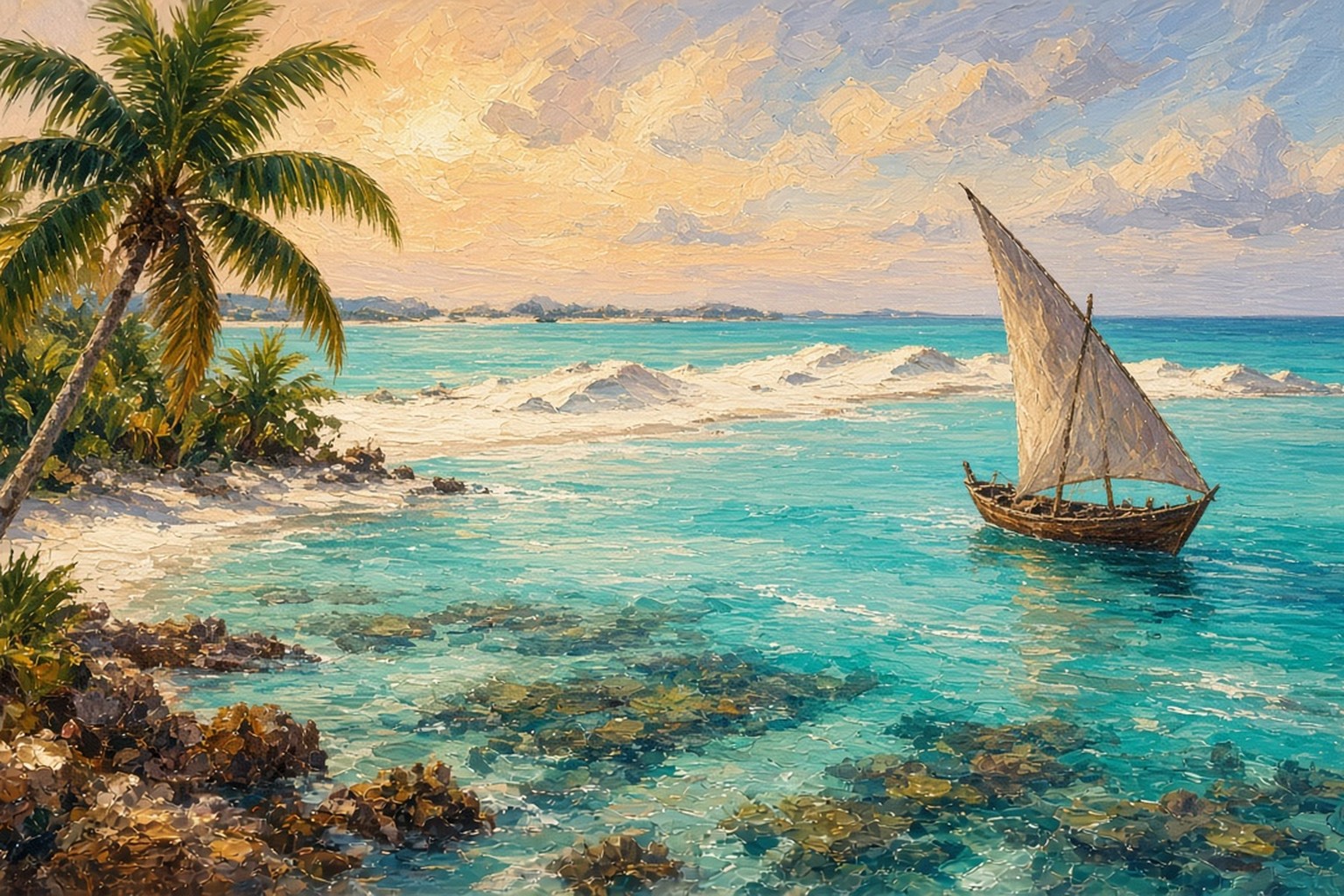
Mozambique is a long, coastal country in southeastern Africa, stretching for thousands of kilometers along the warm Indian Ocean. Known for its turquoise waters, coral islands, and palm-lined beaches, it blends African, Arab, and Portuguese influences into a unique and colorful culture. With its lively music, delicious seafood, and spectacular wildlife, Mozambique is one of Africa’s most rewarding destinations.
Geography and Climate
Mozambique covers about 800,000 square kilometers and is bordered by Tanzania, Malawi, Zambia, Zimbabwe, South Africa, and Eswatini. Its coastline along the Indian Ocean and the Mozambique Channel is one of the longest in Africa, dotted with bays, lagoons, mangroves, and offshore islands.
Much of the south and center consists of low coastal plains, while the land rises toward plateaus and mountains in the north and west. Monte Binga, on the border with Zimbabwe, is the highest peak at about 2,436 meters. Great rivers such as the Zambezi and the Limpopo flow across the country to the sea, and Lake Niassa forms part of the northwestern border.
The climate is tropical, with a hot, rainy season from about November to March and a cooler, drier season for the rest of the year. The coast is occasionally affected by tropical cyclones. Warm ocean currents support some of the richest coral reefs and marine life in the region.
History and Independence
Bantu-speaking peoples settled in the region many centuries ago, farming, working iron, and building trading communities. Along the coast, Swahili and Arab merchants established ports that traded gold, ivory, and other goods across the Indian Ocean.
The Portuguese explorer Vasco da Gama reached the coast in 1498, and Portugal gradually extended its control over the territory. The Island of Mozambique served as the colonial capital for centuries until it was moved to Lourenço Marques, today’s Maputo, in the late nineteenth century.
In 1962, the liberation movement FRELIMO was founded, and an armed struggle for independence began in 1964. Mozambique became independent on 25 June 1975, with Samora Machel as its first president. A long civil war followed, ending with a peace agreement signed in Rome in 1992, and the first multiparty elections were held in 1994.
Economy and Natural Resources
Agriculture employs most of the population, producing cassava, maize, cashew nuts, sugar, cotton, and tobacco. Fishing is also important, and Mozambican prawns are famous across the region.
The country is rich in natural resources, including coal in Tete Province, rubies, graphite, and heavy mineral sands. The Cahora Bassa Dam on the Zambezi River is one of the largest hydroelectric plants in Africa, and the Mozal aluminum smelter near Maputo is a major exporter.
Large reserves of natural gas have been discovered off the northern coast in the Rovuma Basin, and the first exports of liquefied natural gas began in 2022. Ports such as Maputo, Beira, and Nacala also serve as important trade gateways for neighboring landlocked countries.
Culture and Language
Portuguese is the official language, and many African languages, such as Emakhuwa, Xichangana, and Cisena, are widely spoken. Christianity and Islam are the main religions, with Islam especially common along the northern coast.
Music and dance are central to Mozambican life. Marrabenta, a lively urban style born in Maputo, is popular at parties and celebrations, while the timbila xylophone orchestras of the Chopi people are recognized by UNESCO as a masterpiece of intangible heritage.
The Makonde people of the north are famous for their wooden sculptures and colorful mapiko masks. Mozambique has also produced celebrated artists such as the painter Malangatana and the writer Mia Couto, and the bright capulana cloth is worn and gifted throughout the country.
Food and Cuisine
Mozambican cuisine blends African ingredients with Portuguese, Arab, and Indian influences. Matapa, a rich dish of cassava leaves cooked with ground peanuts, garlic, and coconut milk, is a national favorite, often served with rice or xima, a thick maize porridge.
Seafood is plentiful along the coast, especially grilled prawns, crab, and fish seasoned with spicy piri-piri sauce. Chicken cooked with piri-piri, coconut, and lime is popular across the country, and Portuguese-style bread rolls are sold fresh every morning.
Tropical fruits such as mangoes, papayas, cashew fruit, and coconuts are enjoyed everywhere. Meals are often shared with family and friends, accompanied by music and lively conversation.
Tourism and Attractions
The Bazaruto Archipelago National Park offers white sand dunes, coral reefs, and clear waters where dolphins, sea turtles, and rare dugongs can be found. Further north, the Quirimbas Archipelago is known for its quiet islands and historic towns.
The Island of Mozambique, a UNESCO World Heritage Site, preserves colonial-era churches, a fortress, and old stone houses. In Maputo, visitors enjoy the elegant railway station, lively markets, and seafront restaurants, while Tofo Beach near Inhambane is famous for diving with whale sharks and manta rays.
Gorongosa National Park, once badly damaged during the civil war, has become a remarkable story of restoration, with elephants, lions, and many other animals returning. Ponta do Ouro in the far south is a favorite place for diving, snorkeling, and watching dolphins.
Challenges and Opportunities
Mozambique faces challenges such as poverty, limited infrastructure, and powerful cyclones, including Cyclone Idai in 2019. Insecurity in parts of Cabo Delgado Province in the north has also affected communities and investment.
At the same time, its natural gas reserves, fertile land, and long coastline offer great opportunities. Investments in agriculture, tourism, renewable energy, and education could help Mozambique build a more prosperous and resilient future.
Protecting coral reefs, mangroves, and wildlife is also a growing priority, and community-based conservation projects are showing how nature can support local livelihoods. Improved roads, ports, and regional trade links could connect more Mozambicans to new markets and opportunities.
A Land of Coral Islands and Timbila Rhythms
Mozambique is a land of warm tides, swaying palms, and joyful music. From the historic Island of Mozambique and the lively streets of Maputo to the coral reefs of Bazaruto and the wild plains of Gorongosa, it offers adventure and beauty in every region. Colorful, resilient, and welcoming, Mozambique is a true treasure of the Indian Ocean.