
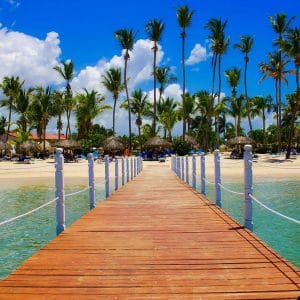
The Dominican Republic, sharing the island of Hispaniola with Haiti, is a vibrant country known for its breathtaking beaches, profound historical significance, and dynamic culture. As the most visited destination in the Caribbean, the Dominican Republic offers a mixture of beautiful natural scenery, colonial architecture, and an inviting tropical climate that makes it a premier vacation spot.
Geography of the Dominican Republic
Located in the heart of the Caribbean, the Dominican Republic is the second-largest country in the region after Cuba, occupying the eastern five-eighths of Hispaniola. The nation boasts diverse geographical features, including mountain ranges such as the Cordillera Central, which is home to Pico Duarte, the Caribbean’s tallest mountain. The country’s north coast faces the Atlantic Ocean, while the south coast borders the Caribbean Sea, providing a range of coastal environments from rocky cliffs to tranquil beaches. Between these coasts lie fertile valleys, dry deserts, and lush rainforests, offering stunning biodiversity.
Climate
The Dominican Republic enjoys a tropical climate with warm and sunny conditions year-round. The temperature averages around 25°C (77°F) in the winter and 28°C (82°F) in the summer. The country has a rainy season from May to November, with variability depending on the region. Its diverse climate and fertile soil allow for a rich agricultural sector that supports a variety of crops, from sugarcane to coffee to tropical fruits.
History
The Dominican Republic has a rich history that dates back to the arrival of Christopher Columbus in 1492, making it the site of the first permanent European settlement in the Americas. Its capital, Santo Domingo, is home to the first cathedral, castle, monastery, and fortress built in the New World. The country’s history is marked by periods of Spanish and Haitian rule, a brief return to Spanish sovereignty, and its ultimate independence in 1844. The struggles and triumphs of the Dominican people throughout the years have forged a strong national identity that is celebrated in their music, art, and cultural festivals.
Culture and Society
Dominican culture is a fusion of Taino (the indigenous inhabitants), African, and European influences, reflecting its historical makeup. Music and dance play integral roles, with merengue and bachata as the most popular forms, both of which originated in the Dominican Republic and are now enjoyed worldwide. Baseball is the most popular sport, passionately followed and played by many from a young age.
Spanish is the official language, and the country is predominantly Roman Catholic, with vibrant religious festivals that blend African and Spanish traditions. The cuisine is a flavorful mix of its cultural history, featuring dishes like sancocho, a hearty stew, and mangu, a plantain mash, both of which are staples in Dominican households.
Economy
The economy of the Dominican Republic is the largest in the Caribbean and Central American region, driven by services, agriculture, and tourism. It has seen steady growth over the past decades, particularly in sectors such as real estate, telecommunications, and finance. Tourism is a major contributor to the economy, with resorts and beaches that are among the world’s most visited destinations.
Tourist Attractions
The Dominican Republic’s rich cultural heritage and natural beauty offer a wide array of attractions. Santo Domingo, the bustling capital, displays historical colonial architecture and modern amenities side by side. Punta Cana, known for its beaches and clear waters, is popular for water sports and relaxation. Other notable attractions include Jarabacoa and Constanza, mountain retreats that provide a cooler climate and opportunities for adventure sports like white-water rafting and mountain biking.
For those interested in natural history, the Eastern National Park, a UNESCO World Heritage Site, offers a glimpse into the biodiversity of the island with its tropical forests and marine environments.
The Dominican Republic embodies a blend of the old and new, where historical streets echo the tales of the past, and vibrant cultural expressions showcase the lively spirit of its people. Visitors to this Caribbean gem can find themselves lost in time, whether exploring ancient ruins or enjoying the rhythms of merengue and bachata on a warm tropical night. The country continues to embrace its heritage while progressing toward a bright and inclusive future.