
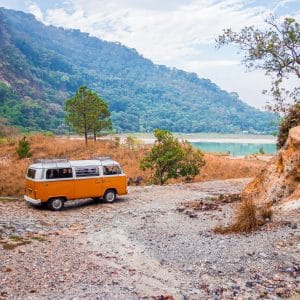
El Salvador, the smallest and most densely populated country in Central America, is a nation rich in culture, history, and natural beauty. Despite its compact size, it offers a vibrant tapestry of experiences from volcanic landscapes and lush forests to ancient archaeological sites and dynamic urban environments. Known as the “Land of Volcanoes,” El Salvador has frequent earthquakes and volcanic activity. It is also a place where warm hospitality is a way of life, and its people face the future with resilience and courage.
Geography of El Salvador
El Salvador is bordered by Guatemala to the west, Honduras to the northeast, and the Pacific Ocean to the south. The country is known for its 300 kilometers (190 miles) of coastline, often referred to as the Salvadoran Litoral, offering beautiful beaches that are popular among surfers for their high-quality waves. The landscape is predominantly mountainous with a central plateau and a coastal plain. The fertile land makes agriculture a significant part of the country’s economy, with coffee and sugarcane as primary crops.
Climate
The climate in El Salvador is tropical with two main seasons: the dry season, which runs from November to April, and the wet season, from May to October. Temperatures vary primarily with elevation and show little seasonal change. The coastal areas are hot while the more elevated areas, like the capital, San Salvador, are milder.
History
The history of El Salvador dates back to the Pre-Columbian era with the Pipil people, a branch of the Aztecs who inhabited the region. Spanish conquest of the area began in the early 16th century under Pedro de Alvarado. Following independence from Spain in 1821, El Salvador was part of the Federal Republic of Central America until its dissolution in 1841, after which it became a fully independent nation. The 20th century was marked by social strife, economic instability, and a brutal civil war from 1980 to 1992, which significantly impacted its development. Today, El Salvador is a democratic country with a growing economy.
Culture and Society
Salvadoran culture is characterized by a strong sense of community, with family at the center of social life. The country’s culture reflects a blend of Indigenous, Spanish, and other Latin American influences. Festivals and religious celebrations play a significant role in Salvadoran society, including the famous celebration of El Salvador del Mundo, the patron saint of the capital.
Cuisine in El Salvador is a mix of Native American and Spanish influences, with dishes like pupusas (stuffed tortillas) being a national staple. Music and dance are also integral to Salvadoran cultural expression, featuring a mix of indigenous and Latin styles.
Economy
El Salvador’s economy has traditionally been dominated by agriculture, but services and manufacturing have grown considerably, due in part to the establishment of free-trade zones. Remittances from Salvadorans living abroad are a significant source of income for many families and form a crucial part of the economy. The country adopted the U.S. dollar as its official currency in 2001, which stabilized the economy and encouraged investment.
Tourist Attractions
El Salvador’s rich history and natural beauty make it an appealing destination for tourists. The country’s archaeological sites, such as Joya de Cerén, a UNESCO World Heritage site known as the “Pompeii of the Americas,” offer a glimpse into ancient daily life. The Ruta de las Flores is a popular tourist route that passes through charming villages known for their crafts, gastronomy, and natural surroundings.
Surfers from around the world are drawn to beaches such as El Tunco, while the Montecristo Cloud Forest offers opportunities for eco-tourism and bird watching. Despite its tumultuous past, El Salvador is a country with open arms, inviting visitors to explore its landscapes, experience its culture, and meet its people.
As visitors witness the resilience and warmth of its citizens, engage with the nation’s rich tapestry of cultural practices, and traverse its varied landscapes, they come to understand El Salvador’s unique charm. This small country offers a memorable journey into the heart of Central America, where history and modernity coalesce gracefully.