
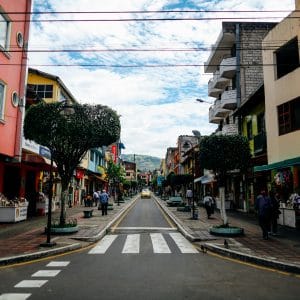
Ecuador, a small country straddling the equator on South America’s west coast, offers a remarkable variety of landscapes, cultures, and experiences within its compact territory. From the Amazon rainforest to the Andean highlands and the stunningly biodiverse Galápagos Islands, Ecuador is a microcosm of natural wonders. Its rich history, vibrant indigenous cultures, and welcoming people make it a captivating destination for travelers from around the world.
Geography of Ecuador
Ecuador is bordered by Colombia to the north, Peru to the south and east, and the Pacific Ocean to the west. Despite its relatively small size, Ecuador’s geography is among the most diverse in the world. The country is divided into four distinct regions: the Amazon, the highlands, the coast, and the Galápagos Islands. Each region offers unique ecological and cultural attractions. The Andes mountains stretch from north to south through the center of the country, with volcanic peaks that reach altitudes over 6,000 meters, including Mount Chimborazo, Ecuador’s highest point and the point on Earth closest to the sun due to the equatorial bulge.
Climate
Ecuador’s climate varies drastically with altitude and region. The coastal areas experience a tropical climate with a wet and dry season, while the highlands have a cooler, more temperate climate year-round. The Amazon basin is characterized by a humid tropical climate, and the Galápagos Islands have a unique climate influenced by ocean currents, which keeps the islands cooler than other equatorial regions.
History
Ecuador has a rich history that dates back thousands of years. It was home to a variety of indigenous groups that were eventually incorporated into the Inca Empire in the 15th century. The Spanish conquest began in 1532 and led to colonial rule until 1822 when Ecuador gained independence after being part of Gran Colombia. Throughout the 20th century, Ecuador experienced a mix of democratic and authoritarian governance, with a return to stability and democracy in recent decades.
Culture and Society
Ecuador’s culture is as diverse as its geography. The country has a strong indigenous heritage, with more than a dozen different ethnic groups, including the Kichwa, Shuar, and others, each with their own languages, traditions, and crafts. Spanish is the official language, and the culture has been significantly influenced by a mix of indigenous and Spanish colonial elements. This blend is visible in the country’s music, dance, art, and particularly its food, which varies widely across regions.
Ecuador is known for its colorful festivals, such as the vibrant Inti Raymi sun festival and the lively Day of the Dead celebrations, which combine Catholic and indigenous traditions. Another important aspect of Ecuadorian culture is its art, notably the Escuela Quiteña, which is renowned for its intricate religious sculptures and paintings in the baroque style.
Economy
Ecuador’s economy is traditionally based on agriculture, with bananas, flowers, and cacao among its key exports. In recent decades, oil has played a dominant role in economic indicators, though the government is actively trying to diversify its economy. Tourism is also a significant and growing sector, driven by the country’s ecological and cultural diversity.
Tourist Attractions
Ecuador offers a wide range of attractions that appeal to nature lovers, adventure seekers, and cultural enthusiasts alike. The Galápagos Islands are perhaps the country’s most famous tourist destination, offering unparalleled wildlife viewing opportunities. The Amazon rainforest in Ecuador is accessible and rich with biodiversity, providing an essential experience for eco-tourists. The Andean highlands are home to beautiful colonial cities like Quito and Cuenca, both UNESCO World Heritage sites famous for their well-preserved historic centers.
Adventure tourism is abundant, with opportunities for hiking, mountain biking, and rafting in various parts of the country. The Pacific coast offers beautiful beaches, excellent surfing, and the chance to observe humpback whales during migration seasons.
As Ecuador continues to evolve and develop, it remains committed to preserving its natural and cultural heritage. Visitors to Ecuador can expect not only to explore its many natural wonders but also to experience a warm welcome from its people, who share a deep pride in their multifaceted identity. This small country offers a breadth of experiences that defy its size, inviting travelers to discover a land of fire and ice, jungle and ocean, tradition and innovation.