
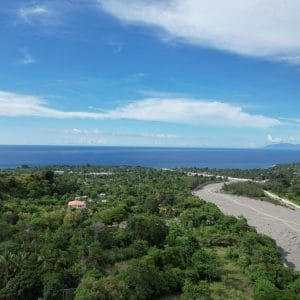
East Timor, also known as Timor Leste, is a country that occupies the eastern half of the island of Timor, alongside the smaller islands of Atauro and Jaco, and the enclave of Oecusse. Despite its tumultuous history and struggles for sovereignty, East Timor today stands as a beacon of cultural richness and natural beauty in Southeast Asia. Gaining independence in 2002, it is one of the world’s youngest countries, with a resilient spirit and a diverse heritage that reflects a blend of local traditions and Portuguese influences.
Geography
East Timor is located in Southeast Asia, bounded by the Timor Sea to the south, Australia’s northern coast, and Indonesia surrounding its western half and northern boundaries. The country’s terrain is predominantly mountainous, providing a dramatic landscape that supports a variety of ecosystems. The capital and largest city, Dili, lies on the northern coast, facing the Ombai Strait. East Timor’s physical geography is not only diverse but also rich in natural resources, including oil and gas fields in the Timor Sea, which are central to its economy.
Climate
The climate of East Timor is tropical and generally hot and humid, with distinct wet and dry seasons. The wet season runs from December to April, bringing heavy rains that can sometimes lead to flooding and landslides. The dry season spans from May to November and is characterized by lower humidity and cooler temperatures, especially in the mountainous areas. This seasonal pattern greatly influences the agricultural activities of the country, which rely heavily on the seasonal rains.
History
East Timor’s history is marked by centuries of colonial rule, beginning with the Portuguese in the 16th century. The country declared its independence from Portugal on November 28, 1975, but was invaded and occupied by Indonesia nine days later. The ensuing conflict lasted until 1999, when the people of East Timor voted for independence in a UN-sponsored referendum. The path to recovery from the devastation of Indonesian occupation has been long and fraught with challenges, but it has also been a journey of resilience and rebuilding.
Culture and Society
The culture of East Timor is a vibrant tapestry woven from various ethnic groups, languages, and traditions. Tetum and Portuguese are the official languages, reflecting the nation’s history and colonial past, but there are about 16 indigenous languages spoken throughout the country. The arts are a vital part of Timorese culture, with traditional dances, music, and crafts such as tais weaving playing significant roles in both daily life and ceremonial occasions.
Christianity, particularly Roman Catholicism, plays a central role in the social and cultural life of the Timorese people, a legacy of Portuguese colonization. This influence is evident in the prominence of church activities and religious festivals, which are celebrated with great fervor across the country.
Economy
The economy of East Timor is one of the least developed in the world but shows potential for growth. It is heavily dependent on oil and gas revenues, which fund the majority of the state budget. The government is actively seeking to diversify the economy through investments in tourism, agriculture, and fisheries. Coffee remains one of the country’s most important agricultural exports, and East Timor’s Arabica beans are beginning to gain international recognition for their quality.
Tourism
Tourism in East Timor is in its nascent stages but offers vast potential due to the country’s stunning natural beauty and rich cultural heritage. Tourists can explore pristine beaches, dive in some of the world’s most biodiverse waters, or trek in the rugged mountains. Significant attractions include the Cristo Rei of Dili, a large statue of Jesus situated on a hilltop with panoramic views of the capital, the colonial architecture of the city of Baucau, and the untouched natural beauty of Jaco Island.
East Timor continues to grow and develop, forging a path toward stability and prosperity. Its people remain its greatest strength, exhibiting resilience, warmth, and hospitality despite the challenges they have faced. As East Timor preserves its past while looking to the future, it invites the world to discover its unique story and share in its journey.